
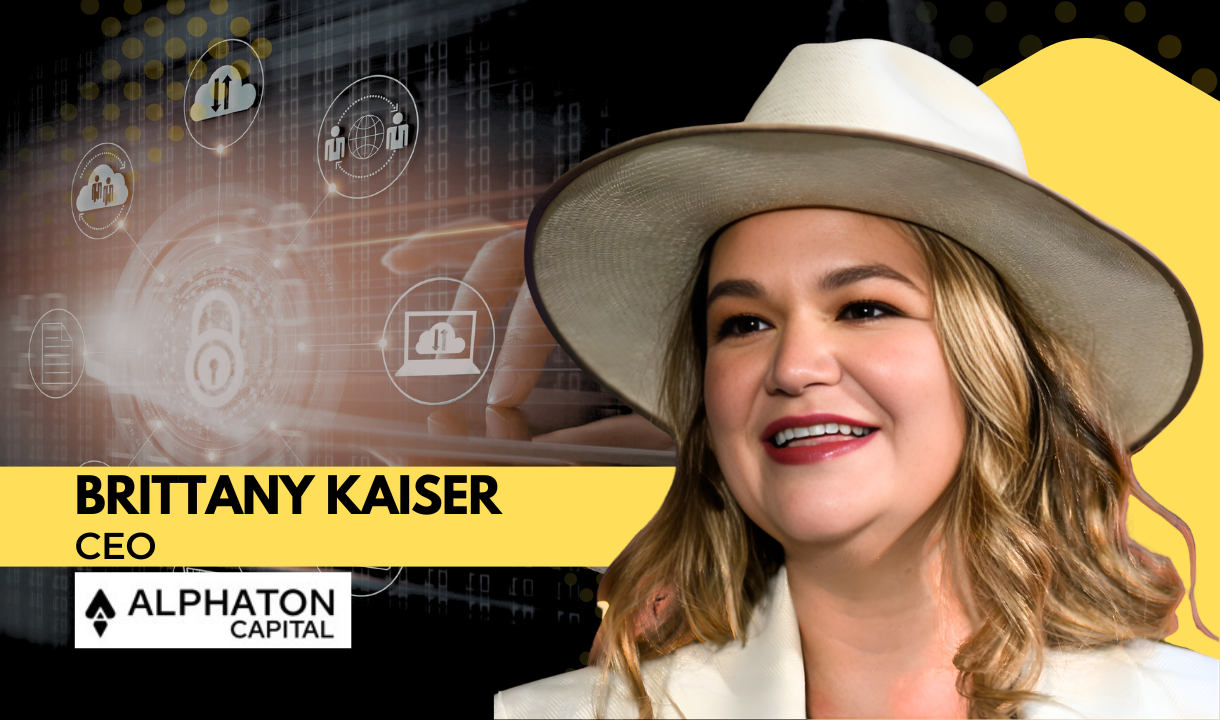
In December 2025, AlphaTON Capital Corp, a digital asset treasury company focused on the accumulation of TON tokens and the development of the Telegram ecosystem, entered into a 60-month enterprise colocation agreement with European data center operator atNorth AB.
According to the company, this deployment represents AlphaTON’s first large-scale data center implementation and is intended to support decentralized artificial intelligence computing infrastructure within the Telegram ecosystem, a cloud-based messaging platform with nearly one billion global active users.

More recently, it closed a US$ 46 million deal to expand its AI infrastructure, acquiring a 576 NVIDIA B300 chip half-cluster. The deployment is significant as it marks the company’s foray into confidential compute, a field that is gaining importance amidst concerns surrounding data privacy in the age of AI. The cluster will operate at AtNorth’s hydroelectric-powered data center in Sweden, with management support from CUDO Compute and SNET Energy Ltd.
To find out more about AlphaTon’s expansion plans in the Nordics, we caught up with Brittany Kaiser, CEO, AlphaTON Capital for a quick tête-à-tête:
Q: What is your assessment of the digital infrastructure landscape across the Nordic region? Why did you gravitate towards Sweden to set up your data center?
A: The Nordics represent the gold standard for digital infrastructure which combines renewable energy abundance, political stability, and a deeply embedded culture of privacy and transparency. Sweden specifically offers everything I prefer in an energy deal: 100 percent renewable energy grid, data protection leadership, and a government that understands data sovereignty as national security. As we are building privacy-centric AI infrastructure, we don’t compromise on jurisdiction.
Q: What made you choose AtNorth AB? As demand grows, what is your plan of action for when you need to scale up?
A: AtNorth’s expertise in sustainable, high-performance computing and their proven track record in the Nordic market made them the obvious partner. Their facilities are purpose-built for AI workloads with renewable energy at the core. Our expansion roadmap in their facility is modular, so it’s designed to scale our deployments up to 4,000 GPUs seamlessly, with additional capacity agreements already in negotiation. Growth is baked into the architecture.
Q: What are the benefits of decentralizing AI computing and building a distributed digital architecture for a business such as yours?
A: Decentralization is resilience. Distributed architecture eliminates single points of failure, reduces latency for global clients, and most critically it prevents any one government or entity from having unilateral access to our infrastructure. For privacy-first AI, geographic distribution is part of the value proposition. Our clients need assurance that their confidential workloads aren’t concentrated in jurisdictions with broad surveillance powers.
Q: The initial capacity is expected to support a 2,000 enterprise-grade GPUs deployment across redundant computing clusters, with expansion potential to 4,000 GPUs for additional capacity. Given geopolitical turbulence, how are you planning to ensure adequate supply of GPUs?
A: We’ve secured multi-year supply agreements with Tier 1 manufacturers and diversified our procurement across multiple geopolitical zones. Strategic partnerships with manufacturers that want to help us scale confidential computing also gives us the opportunity for priority allocations. We planned for scarcity from day one and are in a great position to continue to scale without headwinds.
Q: The Swedish facility provides access to sustainable Nordic energy, with power usage effectiveness capped between 1.4 and 1.7 according to your press release. What is this sustainable power source, and what are some measures you plan to proactively take to lower your facility’s carbon footprint?
A: AtNorth is 100 percent hydro, so renewable and nearly carbon-free. We are also deploying advanced cooling systems for next-gen deployments. Sustainability isn’t marketing for us, it’s both infrastructural ROI and regulatory future-proofing.
Q: Europe has stringent data protection and privacy laws. Given Telegram’s global footprint, will compliance be challenging?
A: Quite the opposite actually. Europe’s stringent frameworks are our competitive advantage. GDPR, NIS2, the AI Act are market barriers that exclude our competitors who treat privacy as an afterthought. Our infrastructure is compliant with all data protection laws and future-proofed for any new regulations including AI safety. Compliance is embedded in our architecture through confidential computing and trusted execution environments where all client data is safe and never accessible by AlphaTON, Telegram, Cocoon or any other of our partners.
Q: Please tell us more about your plan to enter the AI-as-a-Service market.
A: We’re launching confidential AI-as-a-Service for enterprises that can’t afford to hand their proprietary data to hyperscalers. Confidential computing as a turnkey service. Our differentiation is simple: your data never leaves encrypted enclaves, even during processing. Besides processing AI native applications for Telegram and current Cocoon AI clients, we’re targeting regulated industries to move over to Cocoon through our full stack architecture, like finance, healthcare, and government work, where data sovereignty isn’t negotiable.

Q: You have built an ambitious digital ecosystem. What developments do you foresee unfolding over the next five years?
A: Privacy-first AI becomes table stakes, not premium pricing. Regulatory fragmentation forces enterprise computing back onshore, accelerating sovereign cloud adoption. We’ll see confidential computing evolve from niche to industry standard as quantum threats materialize. AlphaTON’s roadmap in 2026 includes 10,000+ GPU capacity across three continents (Europe, US and Canada), proprietary privacy-preserving AI models, and becoming the infrastructure backbone for the post-hyperscaler era. The next five years will separate companies that treated privacy as PR from those who built it into their silicon.