
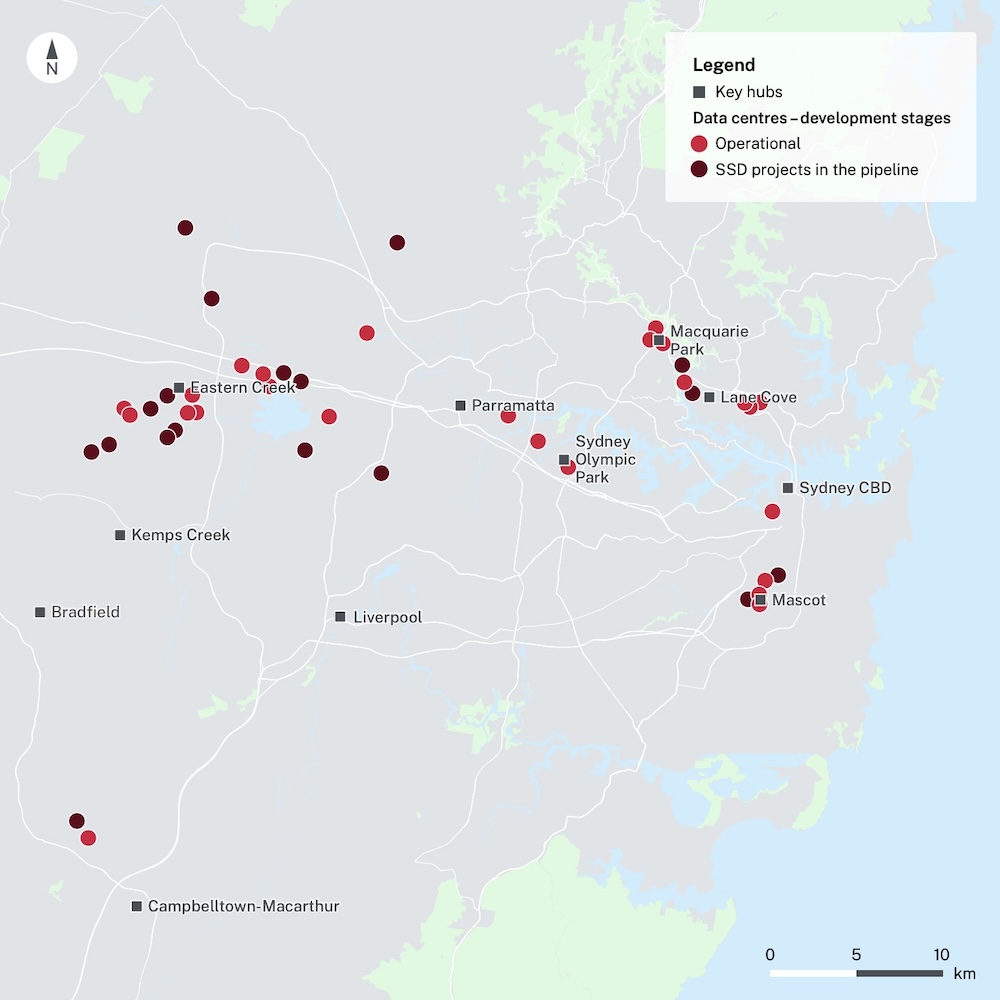
The New South Wales government has moved 15 data centre projects worth a combined AUD 51.9 billion into its Investment Delivery Authority (IDA) pipeline, signalling both strong investor demand and a more selective approach to digital infrastructure development in the state.
The projects, endorsed through the first round of the IDA process, highlight the scale of private sector interest in NSW’s data centre market, while also reflecting a shift towards closer government oversight of energy, water, and infrastructure impacts.
The announcement comes as the state positions itself as a leading destination for data centre investment, with around 90 facilities already in operation. Investment in the sector has grown at an average rate of 65 percent annually over the past three years and now accounts for approximately 12 percent of all non-residential building activity.
Treasurer Daniel Mookhey said the scale of endorsed projects demonstrates strong confidence in NSW but stressed that growth must be managed carefully. “New South Wales is a premium destination for data centres but we are only interested in working with proponents who have a long-term commitment to both this state and their social licence,” he said.
The 15 projects progressing through the IDA span multiple locations across Greater Sydney, with a strong concentration in Western Sydney, reinforcing its position as the state’s primary data centre corridor.
Approved developments include AIMS Capital Management’s Bella Vista Data Centre Campus in Hills Shire; the Lane Cove Data Centre Development Project led by Lane Cove DC Alliance at Mars Road in Lane Cove West; and Goodman Property Services’ Project Atlas in Blacktown.
Additional projects include GreenSquare DC’s SYD1 Stage 2 in Hills Shire; KNBDC SYD4’s Mamre Road Data Centre Campus in Penrith; Lehr Consultants International’s Glendenning Road Data Centre in Blacktown; and Microsoft’s Honeman Close Data Centre, also in Blacktown.
NextDC has three projects in the pipeline: the S7 Data Centre in Eastern Creek in Blacktown, the S4 Data Centre in Fairfield, and the S5 Data Centre and Innovation Hub in the City of Ryde. Further developments include Stack Infrastructure’s 78 Lockwood Road Data Centre in Penrith; Stockland’s project at 2 Davis Road in Wetherill Park in Fairfield; Stockland Fife’s Kemps Creek project in Penrith; and another Stockland-led “Project A” in the City of Ryde. One additional project has been endorsed but not publicly disclosed due to commercial sensitivities.
A Stockland spokesperson told W.Media the company welcomed the outcome, having secured approval for three projects through the process. “Stockland is pleased to have three data centre projects selected by the Investment Delivery Authority (IDA).
“A state-led mechanism such as the IDA presents a significant opportunity for Stockland to leverage its operating footprint and scale its portfolio of data centres in NSW through a coordinated approach to planning and infrastructure delivery.
“By supporting large-scale data centre developments, the IDA is addressing key barriers to private sector investment while supporting innovation, job creation and long-term productivity growth across the NSW economy.
“Stockland looks forward to working closely with the NSW Government to deliver critical digital infrastructure and realise major data storage investment across the Greater Sydney region.”
At the same time, the IDA process has filtered out a significant portion of proposed developments. Around AUD 40.7 billion worth of data centre and technology proposals were not endorsed, having been assessed as premature or overly speculative. The outcome suggests the state is taking a more curated approach to large-scale digital infrastructure, rather than allowing unrestricted pipeline growth.
Data centre consultation launched
The announcement coincides with the release of the NSW Data Centre Consultation Paper, which is intended to guide how future projects are assessed and integrated into the state’s infrastructure system. The consultation focuses on managing the impacts of rapid growth, particularly in relation to electricity demand, water use, and community considerations.
Minister for Planning and Public Spaces Paul Scully said data centres play an important role in jobs, data sovereignty, and the broader digital economy, but noted that planning settings must align with infrastructure capacity and environmental priorities.
Earlier this month, the IDA also endorsed 14 energy projects worth AUD 34 billion, which are expected to support the NSW Electricity Roadmap and help accommodate rising demand from sectors such as data centres. Industry participants said the IDA process provides greater visibility on how governments intend to manage large-scale digital infrastructure investment.
Guy Danskine, managing director of Equinix Australia, told W.Media the announcement reflected both strong demand and the importance of policy certainty. “Today’s announcement from the NSW Government reflects both the scale of demand for digital infrastructure and the importance of getting the policy settings right. Fast-tracking high-quality, investment-ready projects is a positive step that brings greater certainty to the market and helps ensure Australia remains competitive in the global race for AI and digital infrastructure.
“At the same time, Equinix supports a balanced approach to energy and infrastructure,” he said. “Data centres already fund their own grid connections and are increasingly investing in new renewable energy capacity to support sustainable growth. The opportunity now is to align policy, planning and investment so that digital infrastructure can grow alongside the energy transition.”
He added: “Consistency between state and federal frameworks, alongside faster and more predictable approvals, will be critical. With the right settings, data centres can continue to underpin Australia’s digital economy while contributing to long-term energy resilience and national capability.”
The NSW approvals and consultation process kick-off signal a coordinated approach by the NSW government to shape the next phase of data centre growth – supporting continued investment while introducing clearer expectations around sustainability and infrastructure contributions.