
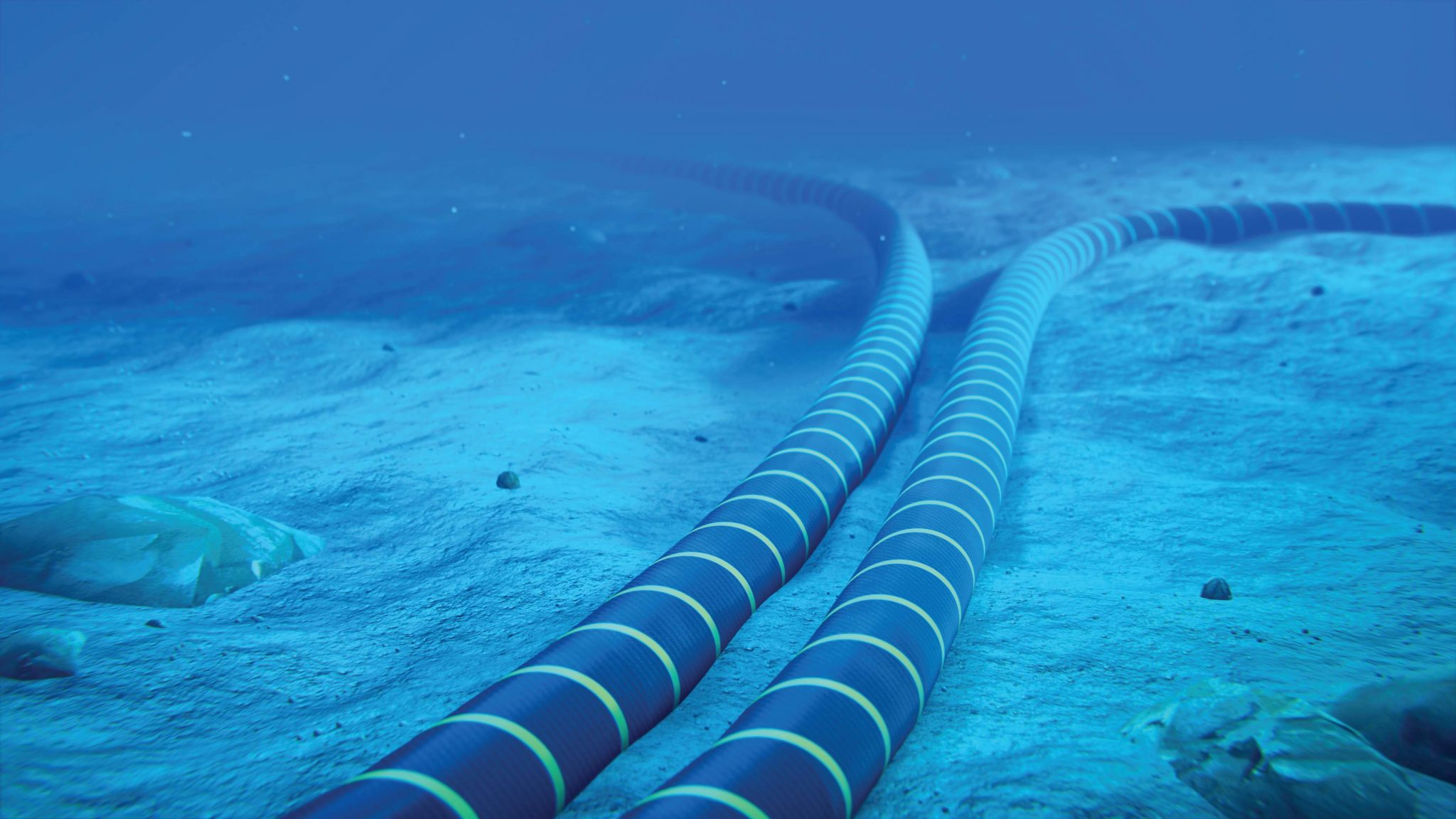
Batam island has the unique advantage of being very near Singapore yet having much cheaper land and utility costs, thus attracting data centers and along with them, subsea cables.
Subsea cables, the silent hidden plumbing that carries all the world’s data, are undergoing a major transition globally. Gone are the days when only telecom operators built them and no one outside of the industry takes much notice of them. Two transformational events changed all that – the exponential growth of data centers worldwide giving rise to a new class of subsea investors – data center operators; and an alarming rise of sabotage in the Baltic Sea since 2022.
The new class of subsea investors are redefining the routes and technology – for example, Google is investing in non-commercially viable routes that traditional telecom operators would never go such as the Australia–South Africa corridors. Meanwhile, Meta’s proposed “Waterworth” envisions cables spanning several continents. This means new hubs will be developed along the new routes.
Clearly, the importance of subsea cables cannot be underestimated – they go hand in hand with data centers and telecommunications infrastructure. They are the foundational connectivity underpinning cloud services, financial platforms, and AI infrastructure.
Subsea infrastructure has now become both a critical and strategic asset, sought after by tech giants which are incorporating it into their increasingly vertically integrated supply chain structure and this is only the beginning, an industry veteran observed.
Strategic advantage
In Southeast Asia, Singapore stands out as the most connected nation with 44 landing points including 12 in the pipeline. But as the island nation runs out of suitable sites for landing points, the attention has spilled over to its neighbours, namely Johor and Batam island as alternative locations.
Where Johor takes the cake with the bulk of data centers located there, Batam island, located 20 kilometers south of Singapore and 25 kms from Johor, is seen as a feasible alternative to landing in Singapore. Batam, almost the same size as Singapore, has gradually overtaken Malaysia in terms of landing station per square kilometre. There are 20 landing stations (including five in the pipeline) on the tiny island compared to 25 (plus seven under construction) for the entire Peninsular Malaysia. That speaks a lot about Batam’s comparative advantages.
As the largest city in the Riau Islands Province in Indonesia, Batam is a free trade zone, and is Indonesia’s equivalent to China’s Special Economic Zones (SEZs) – a test hub for the country’s planners for new economic policies. Spread across 715 km² is an industrial hub comprising electronics factories, oil service sector, ship repair industry and Nongsa Digital Park which houses most of the island’s data centers.
Batam’s biggest advantage is its strategic location right next to Singapore, currently the largest data center hub in Southeast Asia. Cheaper and abundant coastal land, and cheap power costs all converge to create ideal conditions for cable landing stations. The Indonesian island already has several active cable landing points facilitating direct international connectivity. Nongsa in particular is connected to more than a dozen international subsea fiber-optic cable segments that land about 5 kms away with direct links to other parts of Indonesia, Singapore, and the US West Coast. “The very close proximity of Nongsa to Singapore allows for planned new additional submarine fiber optic capability to reach directly Nongsa with repeaterless cables that drastically reduce latency, making the data center infrastructure in Nongsa “as if” it was in Singapore,” an industry expert reveals.
“Compared to Batam, Johor currently does not have any direct international connectivity as everything backhauls into Singapore first,” says James Rix, Head of Data Centres PDS Southeast Asia & Korea at JLL. “This can result in bandwidth issues,” he adds.
“As the number of data centers grows, this will only drive more submarine cables and landing stations. Connectivity will be enhanced and latency will reduce. Also, the restriction on bandwidth will dissipate,” Rix reckons.
Adding to Batam’s appeal is its ‘safe harbour’ status due to its low disaster risk profile. It is seismically stable unlike some of Indonesia’s bigger islands like Java and Sumatra. Investors also have the benefit of tax incentives in addition to a welcoming environment for them.

Batam’s outlook
The island of over one million people can look forward to more subsea cable landings judging by the demand for subsea cable systems which rises alongside the exploding trajectory of data centers worldwide. The global subsea systems market is projected to grow by about US$ 4 billion over the next four years, driven by a surge in cloud adoption, hyperscale data centre expansion, and the exploding bandwidth appetite of AI workloads.
With Johor set to become the biggest data center hub in Southeast Asia by 2030, more undersea cables are expected to land in the SIJORI Growth Triangle (Singapore-Johor-Riau) of which Batam is a key player. It already has a ready infrastructure and a focused supply chain due to the high concentration of cable landing stations there.
This article was originally published in Issue 12 of w.media’s Cloud & Datacenters magazine.