
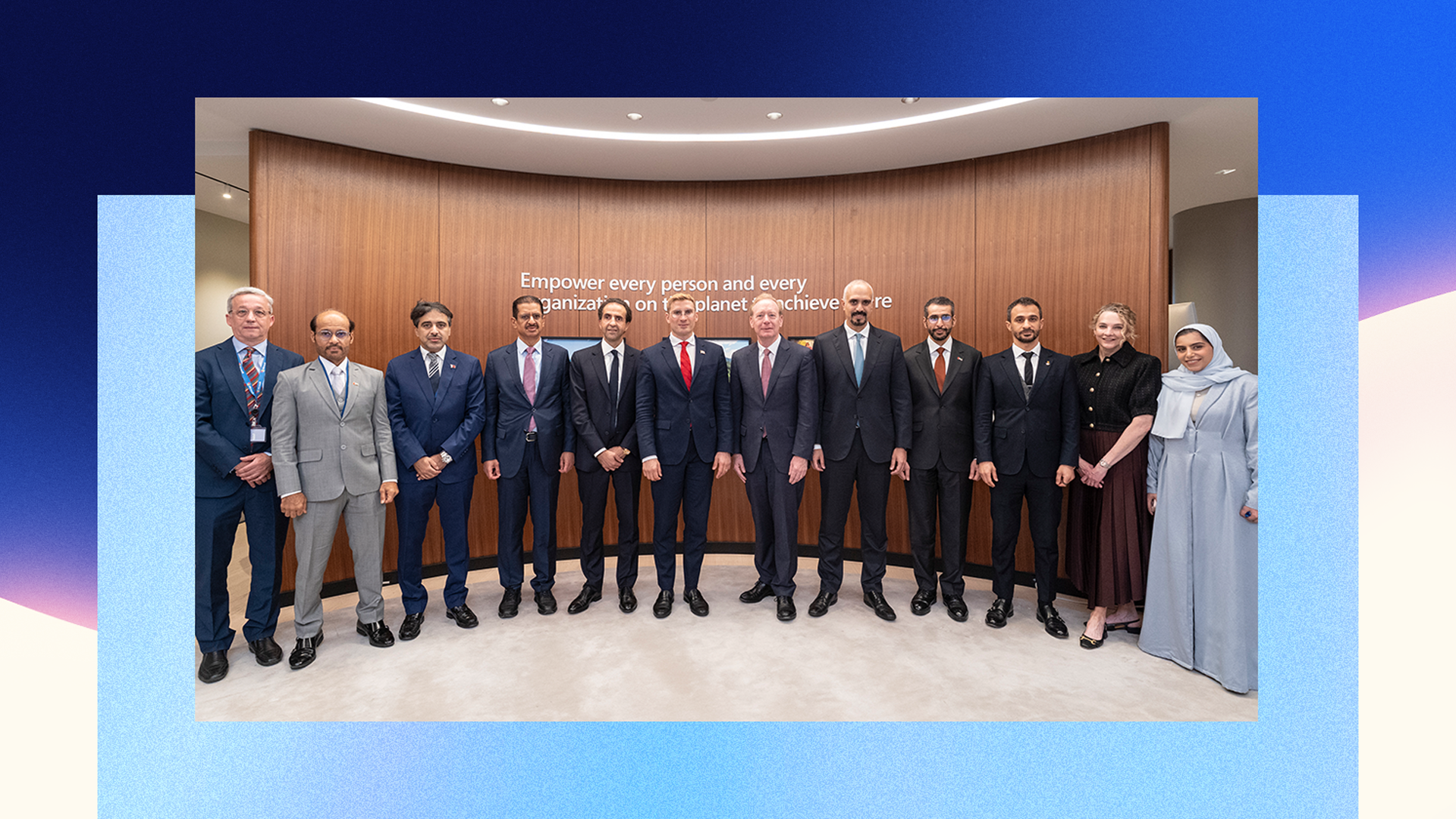
Microsoft plans to invest more than US$ 10 billion in capital and operating expenses in the Middle East through 2030, expanding cloud, artificial intelligence and digital infrastructure across Kuwait, Qatar, Saudi Arabia and the United Arab Emirates (UAE).
According to a Microsoft blog, the investment forms part of a new regional framework covering technology infrastructure, digital resilience, cybersecurity and AI development. Microsoft has operated in the Middle East since 1991, with the new plans building on partnerships with governments, businesses, educational institutions and technology organizations in the region.

Cloud and AI infrastructure will be expanded across the four markets, including additional capacity and new capabilities. Microsoft will also work with governments and national AI organizations on AI deployment in public services and the wider economy.
Existing partnerships include work with HUMAIN, G42, QAI and the Government of Kuwait, alongside digital government initiatives such as TAMM in the UAE, SDAIA’s ALLaM in Saudi Arabia, TASMU in Qatar and Microsoft 365 Copilot adoption across the Government of Kuwait.
The partnerships will cover sovereign cloud services, Arabic and multilingual AI, and the use of AI in government and business services. Microsoft Sovereign Public Cloud, Sovereign Private Cloud and Project Digital Shield will support these efforts where available.
Connectivity investment
Over US$ 400 million will be invested in subsea and terrestrial connectivity across the Middle East by 2030. The investment will increase network capacity and provide additional routes for regional data traffic as demand for cloud and AI services grows.
Microsoft has invested in international subsea cable systems including SeaMeWe-6, which has landings in Qatar, Saudi Arabia and the UAE. Its global network spans more than 275,000 miles of terrestrial and subsea fiber.
Network redundancy allows traffic to be rerouted through Middle East corridors during disruptions, helping maintain service continuity. The planned connectivity investment will support the expansion of Microsoft’s regional cloud and AI infrastructure.
Data centers, water and energy
New cloud and AI infrastructure will incorporate measures covering water use, carbon emissions and energy supply. Microsoft will work with infrastructure lessors to use zero-water cooling technologies where feasible as part of its water-related goals.
Water use is a particular consideration for new data center infrastructure in the Middle East. Work with governments and regional stakeholders will cover water reuse, replenishment and other water-management measures. Microsoft will also work with regulators, utilities and infrastructure partners to expand access to carbon-free electricity and encourage additional clean-energy investment.
Digital resilience and data protection
A new Middle East digital resilience initiative will focus on business continuity and recovery. The program will provide digital resilience assessments, reference architectures, readiness guidance and continuity planning. The work will help organizations identify vulnerabilities, protect critical data and test recovery capabilities.
Existing data-protection sovereignty and business-continuity commitments will also be extended to eligible governments and customers in Kuwait, Qatar, Saudi Arabia and the UAE. These efforts will be supported by Microsoft’s sovereign-cloud services and Project Digital Shield, with a focus on data protection, privacy, security and operational resilience.
Cybersecurity cooperation
Cybersecurity cooperation will be expanded with authorities in Kuwait, Qatar, Saudi Arabia and the UAE as the countries develop their digital infrastructure. A network of Microsoft cybersecurity champions across the four countries will connect government priorities with Microsoft’s cybersecurity resources and expertise.
The cooperation will address cybersecurity risks affecting governments, critical infrastructure and national economies as more services move to digital platforms.
AI governance and research
Work with governments, businesses, researchers and civil society organizations will focus on AI governance, testing and assurance. Microsoft will support AI governance capabilities and approaches to evaluating AI systems.
Collaboration will also expand with the Responsible AI Future Foundation (RAIFF), co-founded with G42 and the Mohamed bin Zayed University of Artificial Intelligence (MBZUAI). The initiative focuses on responsible AI practices and evaluation tools for high-impact AI applications.
The AI for Good Lab will continue research partnerships in the region focused on food security, low-resource languages, and climate and disaster resilience. One initiative, the LINGUA program, supports language technology development for underserved communities. Further work with governments, NGOs, nonprofits and research institutions will focus on developing and scaling AI applications addressing regional challenges.

The initiatives will run through 2030, with the initial framework focused on Kuwait, Qatar, Saudi Arabia and the UAE.