
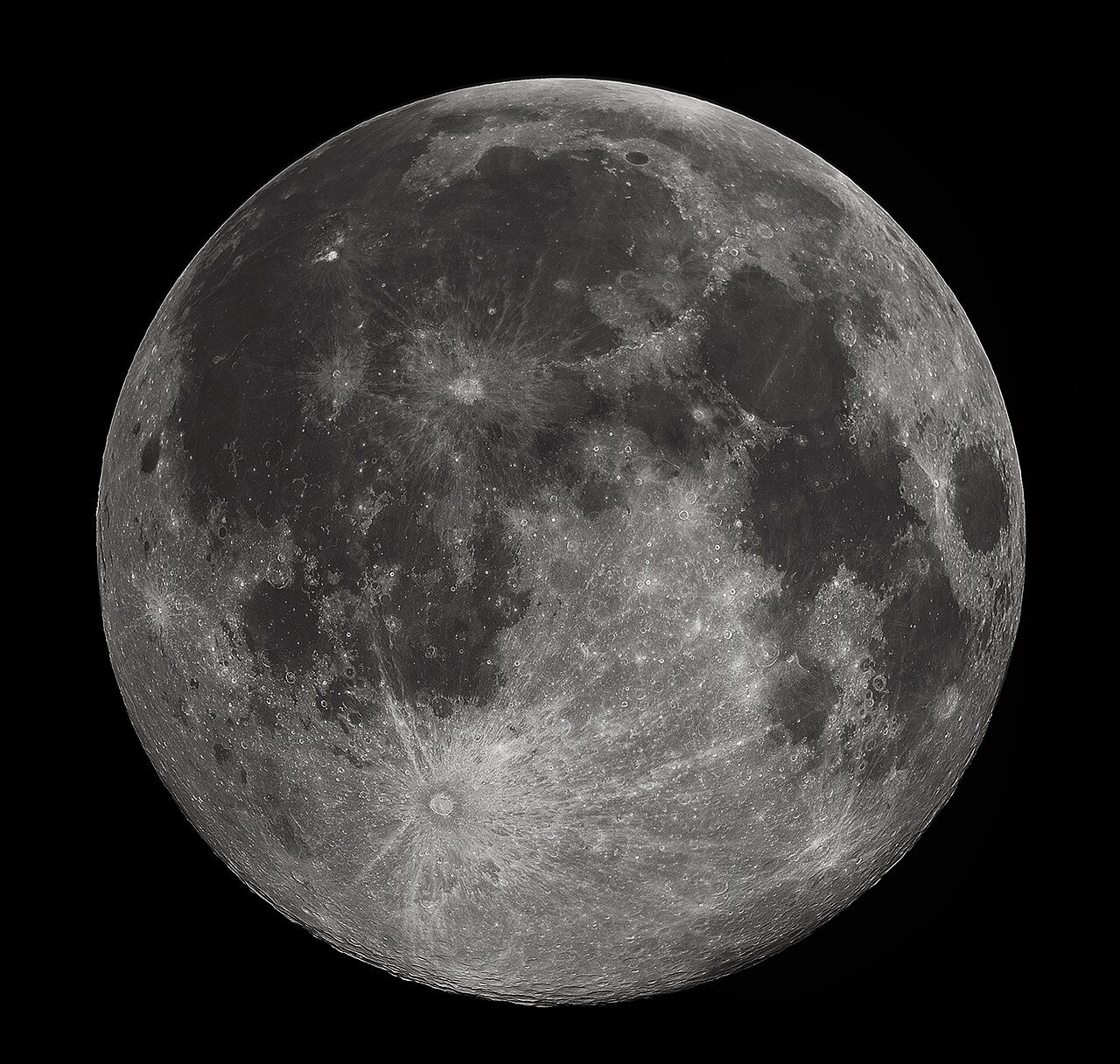
Hewlett Packard Enterprise (HPE), an American multinational business information technology company, plans to send its Spaceborne Computer 4 module to the Moon, where it will run artificial intelligence (AI) applications and high performance computing (HPC) tests on the lunar surface. The system will travel aboard Astrolab’s FLIP rover as part of a mission planned for late 2026 under NASA’s Commercial Lunar Payload Services (CLPS) initiative. Voyager Technologies’ Griffin-1 lander will carry the rover to the lunar South Pole region.
According to a HPE press release, the mission will test whether advanced computing systems can operate in the lunar environment and support future exploration and research. The computer is expected to run large language models to analyse visual data, generate insights and support autonomous monitoring. Other tests will focus on processing LiDAR data for mapping, navigation and terrain analysis, as well as deploying AI services on the lunar surface.

“The next chapter of lunar exploration will depend on the ability to turn data into insights at the point of discovery,” said Scott Wiest, fellow and global sales chief technologist and vice president, HPE. “With HPE Spaceborne Computer-4, we are bringing AI and high performance computing to the lunar edge, helping the acceleration of scientific discovery and building the infrastructure for the next era of exploration.”
The module is designed to operate without fans and withstand the conditions near the lunar South Pole. It includes a low-power central processing unit (CPU), a graphics processing unit (GPU) and solid-state storage supplied by KIOXIA. HPE has also developed software to manage interactions with Earth-based resources and transfer data and results back to Earth.
HPE will provide computing support to Astrolab’s mission control centre in Hawthorne, California, using HPE Private Cloud and HPE CloudOps Software to manage and automate workloads.
NASA and Deloitte will also contribute to the mission. NASA will use its Federated Learning for Unbounded and Intelligent Decentralization (FLUID) experiment to test coordination between three AI models trained on data from Earth, the Moon and the International Space Station. It will also test a large language model designed to search and interpret onboard documents. Deloitte will deploy Silent Shield, a cybersecurity system designed to detect intrusions through predictive analytics and anomaly detection.

Spaceborne Computer-4 builds on HPE’s previous computing deployments aboard the International Space Station. The company said the lunar mission will assess the use of advanced data processing beyond traditional space based infrastructure.