
AI infrastructure company Firmus Technologies has signed a 12-year wholesale energy supply agreement with commodities trader Gunvor Group to secure 600MW of firm electricity for its planned AI factory developments in South Australia. The agreement will support the next phase of the company’s Project Southgate initiative, with Gunvor backing the development of 1.2GW of new renewable generation and 1.5GWh of battery storage by 2032 to supply Firmus’s expansion in the state.
The announcement comes just days after the South Australian government unveiled plans for a dedicated Data Centre and AI Infrastructure Act as part of a broader strategy to attract large-scale AI infrastructure investment, with Firmus emerging as one of the first major developers to align new energy commitments with the state’s policy direction.
Under the agreement, Firmus’s first South Australian AI factory campuses at Tailem Bend and Stirling North will be supported by 600MW of firm electricity as part of the company’s planned 2.7GW regional AI infrastructure pipeline. The deal also includes a demand response mechanism under which Firmus will reduce electricity consumption for up to 220 hours each year when wholesale electricity prices exceed agreed thresholds, allowing capacity to be redirected to other users during periods of peak demand.
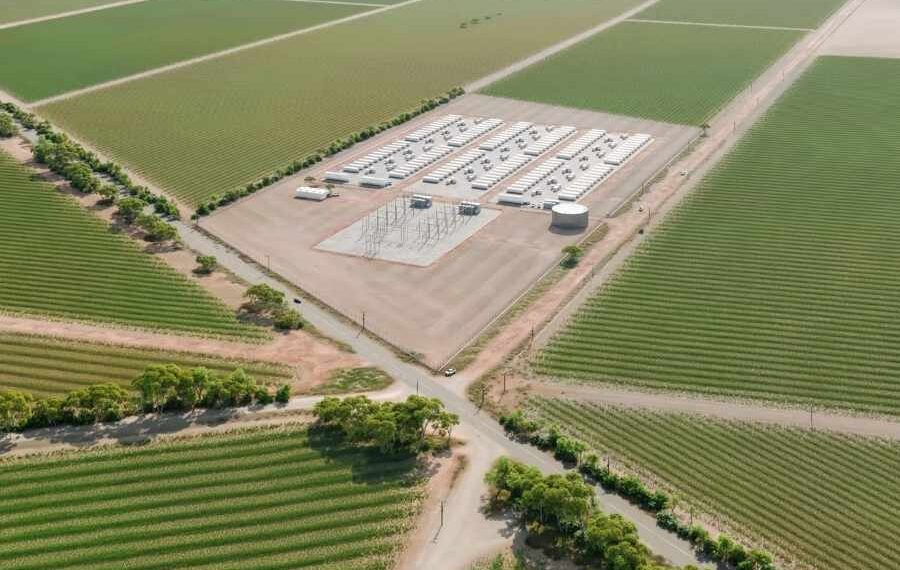
As part of the agreement, Firmus has also signed a long-term offtake supporting GreenPoint Energy’s 200MW/800MWh Koolunga Battery Energy Storage System, currently under construction near Brinkworth in South Australia’s Mid North and due to reach commercial operation in the first half of 2028. The grid-forming battery will provide more than half of the company’s initial firming capacity commitment.
Oliver Curtis, co-CEO of Firmus Technologies, said the agreement demonstrated the company’s approach to integrating AI infrastructure with new energy investment. “Our South Australia energy agreement puts our commitments into practice, backing new renewable generation, major battery storage and flexible energy use that supports the grid,” he said.
“This is about investing in regional South Australia – creating new infrastructure, supporting local jobs and strengthening the electricity system while building the capacity Australia needs for the next generation of AI,” he added.
South Australian Premier Peter Malinauskas said the project demonstrated how the state’s renewable energy transition was attracting AI and digital infrastructure investment. “South Australia is leading the clean energy transition, and this project demonstrates how that leadership is attracting the industries of the future,” he said.
Energy and water commitments
Alongside the energy agreement, Firmus also published Australian Energy and Australian Water Stewardship policies, setting out measurable commitments covering renewable energy procurement, battery storage, demand response, transmission costs, cooling technology and transparent reporting across its Australian operations.
The company said the Energy Policy translates the Australian Government’s Expectations of Data Centres and AI Infrastructure Developers, released in March, into operational commitments for its grid-connected AI factory developments. Firmus said its approach is based on the principle that “AI infrastructure should be part of the energy transition, not a burden on it,” combining energy-efficient AI factories with grid-aware operating software, direct contracting of firming capacity and integrated workload management.
Among the commitments, Firmus said it would procure more new renewable generation capacity than it contracts for its own electricity demand, require at least 2.5MWh of new firming capacity for every 1MW of contracted load, fund its own project-specific transmission connection infrastructure, and purchase electricity on commercial terms without seeking preferential tariffs or subsidies.
“Our energy and water policies turn that work into measurable commitments,” Curtis said. “They set out how we intend to grow this new industry responsibly while strengthening the electricity system, managing water carefully and supporting regional investment.”
The Water Stewardship Policy commits the company to prioritising dry-mode cooling, site-specific water planning and the use of recycled or non-potable water where practical, alongside public reporting of water performance. Firmus said its AI factories are designed to operate in dry mode by default, with water only required under limited operating conditions. Using its Launceston AI factory as an example, the company said annual cooling water consumption is expected to be equivalent to around 10 days of cooling demand, or approximately the annual water use of 20 average households.
Together, the policy commitments and the Gunvor agreement come just after South Australia announced its data centre legislation plans, with Firmus becoming one of the first developers to publicly articulate how it intends to align large-scale AI infrastructure with emerging government expectations around energy, water and grid integration.
The announcements represent the latest milestone in Project Southgate, which is expected to span multiple AI factory campuses across regional South Australia. Together with IREN’s proposed 800MW AI campus at Bundey, the developments emphasise South Australia’s ambition to establish itself as a destination for gigawatt-scale AI infrastructure, supported by new renewable generation, battery storage and dedicated planning reforms, despite having a much smaller existing data centre footprint in the state.