
Firmus Technologies has agreed to invest approximately USD 300 million in SUBCO’s planned APX East submarine cable, securing up to 150Tbps of dedicated capacity between Australia and the US for 25 years. The agreement makes Firmus a cornerstone customer of APX East, which SUBCO is developing as a direct Australia-US system targeting Ready for Service in the fourth quarter of 2028.
The companies said the capacity will form an international connectivity layer for Firmus’s planned network of AI Factories in Australia, supporting the movement of data between its facilities and customers in the US and other international markets. While the deal is one of the more substantial commitments to international connectivity announced by an Australian data centre or AI infrastructure company, the USD 300 million investment and 150Tbps capacity are commitments under the agreement rather than capacity currently in service.
Firmus co-CEO and co-founder Tim Rosenfield said the company needed to consider connectivity alongside the development of its AI infrastructure. “Building the compute is only part of the challenge. We also need to reliably connect that infrastructure to the world,” Rosenfield said. “Securing up to 150 terabits per second of dedicated capacity gives us the scale and performance to connect Australian AI infrastructure directly with the United States.”
Direct route to the US
APX East is being designed as an independent, direct trans-Pacific route between Australia and the US. SUBCO founder and co-CEO Bevan Slattery said the system was initially motivated partly by concerns about the resilience and capacity of existing international routes.
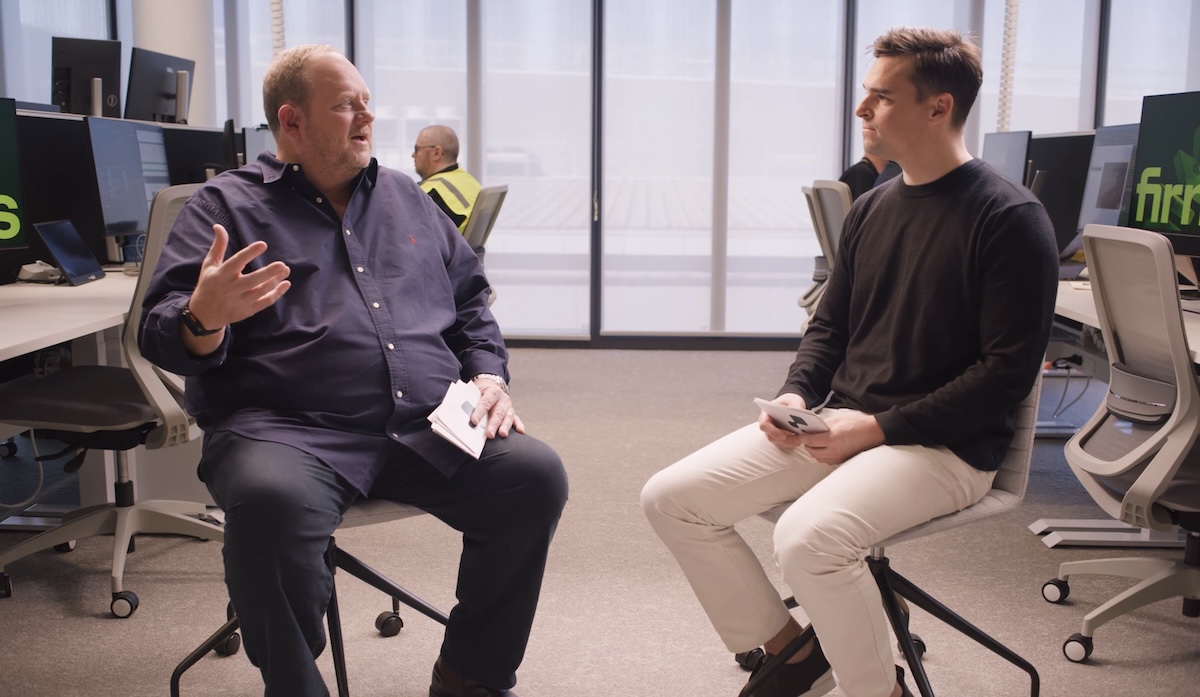
In a discussion released alongside the announcement, Slattery said existing routes were becoming increasingly “tired and overbuilt” and argued that new infrastructure could improve the resilience of Australia’s international connectivity.
A key feature of APX East is its planned express route. Slattery said improvements in subsea system efficiency had reduced power consumption per amplifier by about 20 percent, allowing the system to cover approximately 13,000 kilometres without additional power input and avoid a traditional landing in Hawaii.
The resulting route is intended to provide a lower-latency direct connection between Australia and the US, although the companies’ announcement is more focused on capacity and connectivity as opposed to positioning latency as a defining requirement for AI workloads.
Rosenfield said the cable represented an extension of Firmus’s approach to building its AI infrastructure. “We’re building a network of AI Factories across Australia. But building the compute is only part of the challenge. We also need to reliably connect that infrastructure to the world.”
SUBCO’s Slattery said the agreement reflected growing international connectivity requirements associated with AI infrastructure. “The connectivity requirements of AI are fundamentally reshaping demand patterns on international subsea routes,” he said.
Building an Australian AI infrastructure network
Firmus is developing AI Factory projects in several Australian states, with its plans including facilities in Tasmania and South Australia as well as projects elsewhere in the country. The company has increasingly positioned its model as vertically integrated, spanning energy, data centre infrastructure, compute and connectivity.
Rosenfield said the APX East agreement was intended to provide a long-term international route for the output of those facilities. “This is a 25-year investment in Australia’s future,” he said. “AI is fast becoming one of Australia’s next major export industries, but that opportunity will only be realised if we invest in the infrastructure that underpins it.”
APX East is currently in development, with SUBCO targeting commercial service in Q4 2028. The system adds to the company’s existing portfolio of submarine cable projects, including INDIGO West, INDIGO Central and the Oman Australia Cable.
The agreement also gives Firmus a long-term commitment to international connectivity several years before its planned AI Factory network is expected to reach full scale, linking its Australian infrastructure strategy to the development timetable of a new trans-Pacific cable.