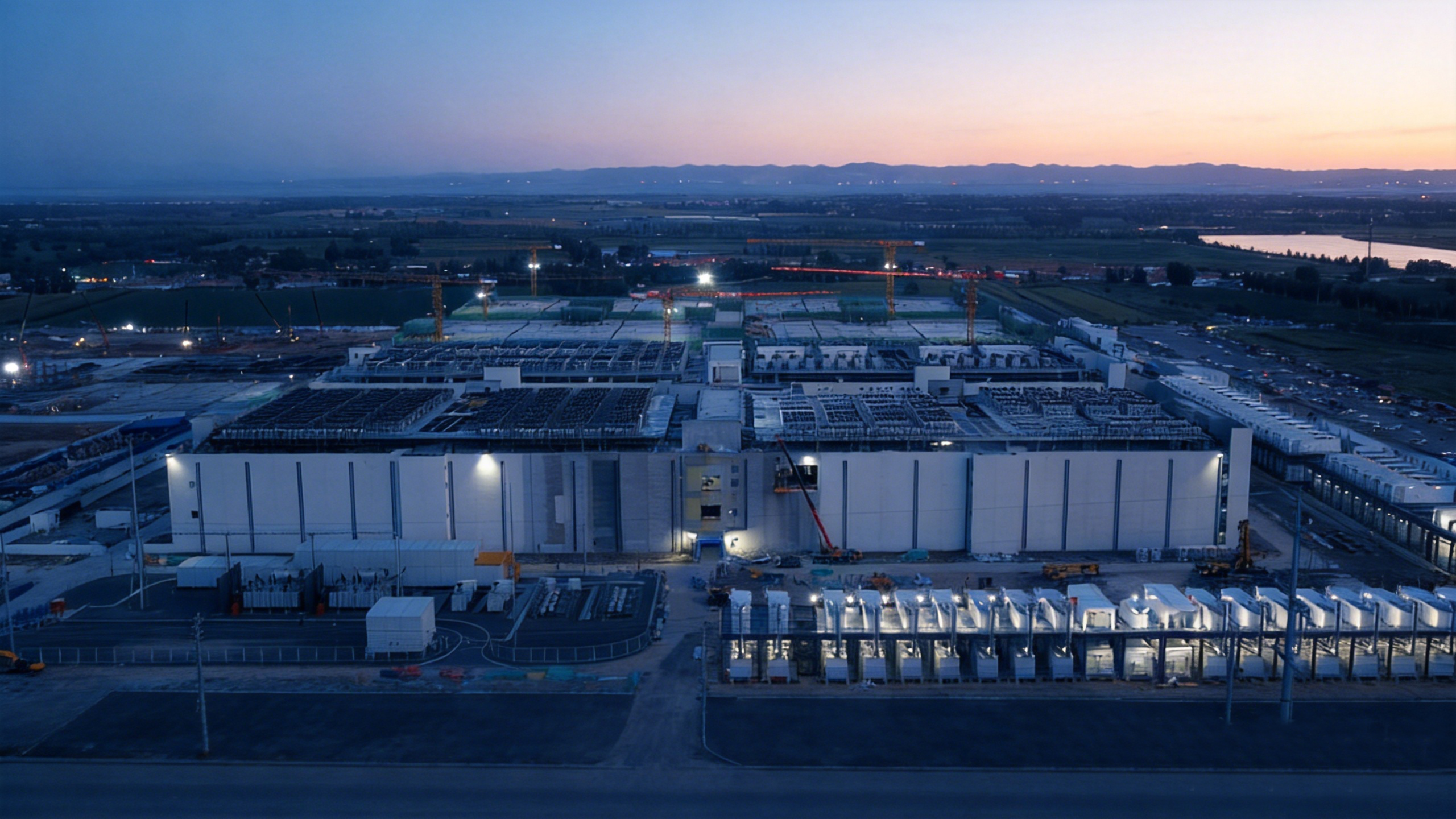
Envision Galaxy Campus concretizes Mission Gobi from a global proposition to commissioned infrastructure.
In one of the most ruggedly beautiful places on Earth, steel and concrete are shaping up beside endless steppes, dramatic mountains, and the Gobi Desert, to create an artificial intelligent campus in Ulanqab that’s complemented by primal intelligence found only in this part of the world.
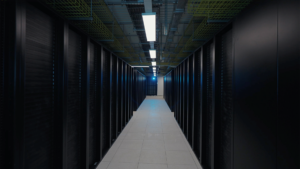
Home to an upcoming AI data center, the Envision Galaxy Campus, this is where China’s next AI era is envisioned to start. At the heart of the campus is a 120,000-square-metre AI supercomputing facility that is designed to deliver one million PFLOPS of computing capacity and support up to one million AI accelerators at full build-out, which could scale beyond 2 gigawatts (GW).
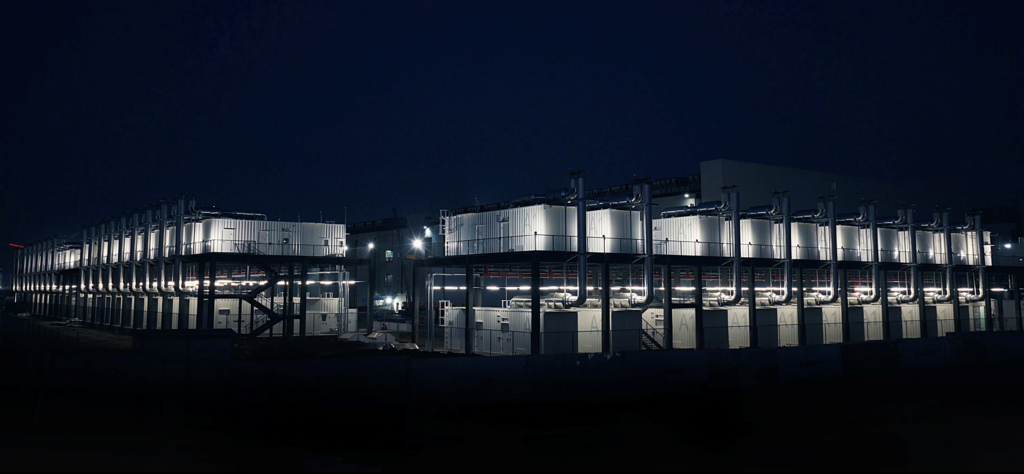
Envision Galaxy Campus is the concretization of Mission Gobi which envisions the development of 5 GW of green AI data center capacity in desert and arid regions worldwide by 2030. First presented by Envision’s Founder and CEO Lei Zhang at VivaTech in Paris in June 2026, Mission Gobi is a replicable blueprint for the world. It aims to bring compute closer to places where clean energy is plentiful, then use software and storage to make that energy dependable.
Apart from its massive scale, how the campus will be powered is the real innovation. In this isolated region, the sun is bright and the wind is strong on most days. This is the source of the renewable energy which the AI data center uses to power its mostly renewable-powered facility.
Envision’s end-to-end energy management approach integrates renewable generation, dedicated transmission infrastructure, large-scale energy storage and intelligent controls, to maximise output. The power system draws in the wind and solar resources around Ulanqab and orchestrates them to deliver stable power to the demanding and fast-changing load profile of AI clusters.
Envision Galaxy Campus treats energy as part of the computing architecture, and not as a utility connection added at the end.
The end result is very cost-competitive green power, thanks also to the strategic location. Ulanqab is teeming with abundant renewable resources.Its annual average temperature of about 4.3°C provides natural ‘free cooling’, helping to reduce cooling energy use and operating costs.
Located in Inner Mongolia, China, Ulanqab lies about 300 kilometers west of Beijing and is just 1.5 hours away by high-speed bullet train or a 3-hour drive.
Combine these advantages with high network performance, it’s the perfect recipe for low-latency, high-density computing.
From Ulanqab to the world
International peers are reaching the same conclusion in parallel – an energy-first solution for the biggest bottleneck in AI buildout now – the power quandary.
US-based Crusoe AI Data Centers prioritizes energy first for its high-density AI infrastructure while Portugal’s Start Campus is engineered for maximum flexibility – delivering a 1.2-GW renewable-powered AI campus paired with low-latency global connectivity.
Envision differs as it enters the AI infrastructure as a renewable-energy systems company, with capabilities spanning wind and solar, storage and intelligent power controls. This enables generation, grid, storage and compute to be designed as one system.
From a global standpoint, Envision Galaxy Campus, as the first flagship project of Mission Gobi, is a Chinese AI success story of a different kind. It unleashes China’s depth in renewable manufacturing, large-scale engineering and digital infrastructure into an exportable architecture for AI.
As Ricky Zheng, Head of Envision’s AIDC business says, “The next frontier of AI is infrastructure. As AI models become larger and more compute-intensive, the limiting factors are increasingly power availability, network performance and energy efficiency.”
If Mission Gobi is replicated beyond China, Envision will be exporting not just equipment, but a systems approach: build compute where renewable energy is abundant, then use innovative power system to orchestrate delivery for a seamless experience.