
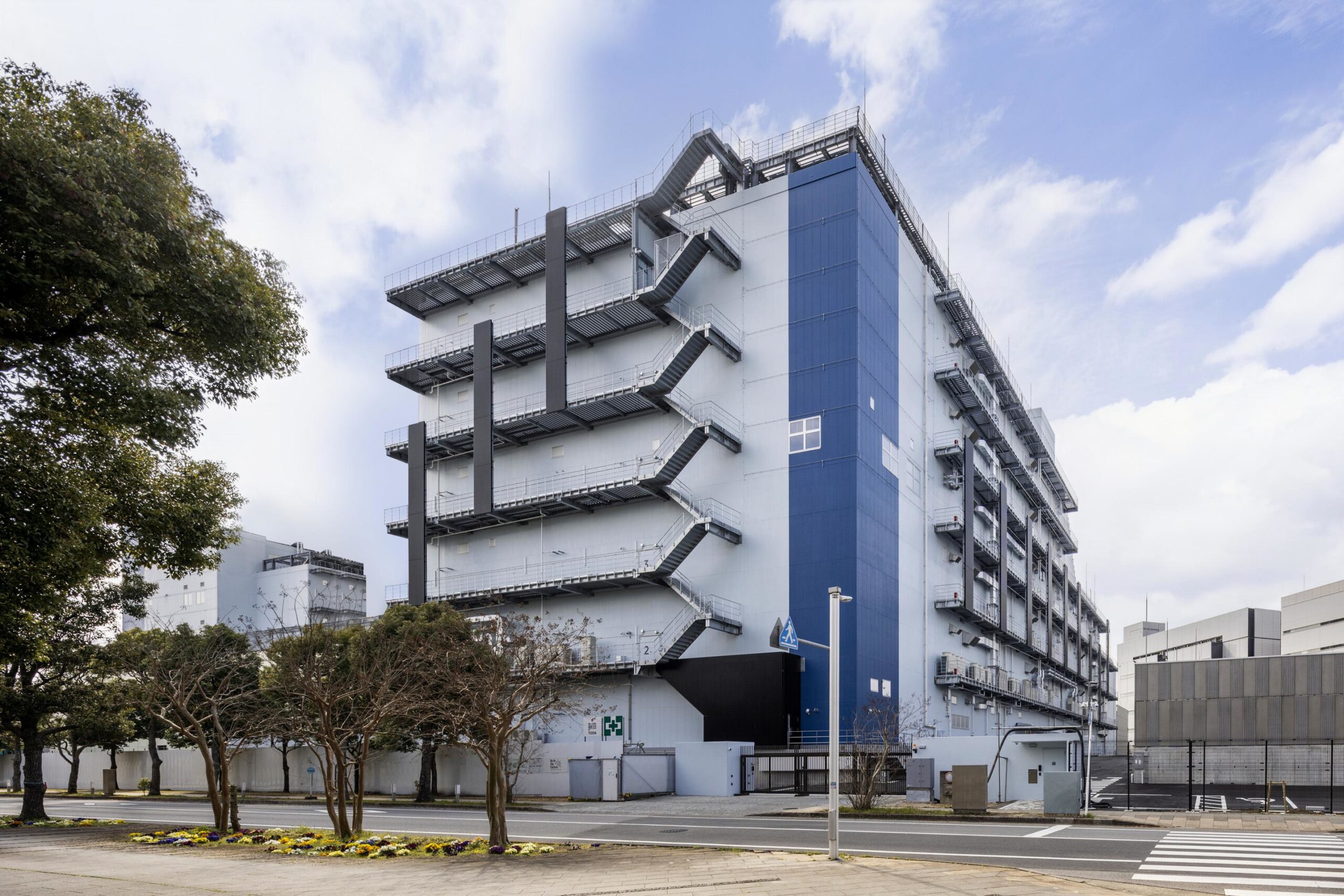
Digital Realty, a global provider of cloud and carrier-neutral data center, colocation, and interconnection solutions, has announced the opening of the NRT14 data center at its NRT campus in Inzai City, Chiba Prefecture, in Japan. NRT14 is the third facility at the NRT campus, following the NRT10 data center, which opened in 2021, and the NRT12 data center, which opened in 2024. With the addition of NRT14, the total IT power capacity of the NRT campus is expected to approach 100 MW.
In a press release, Digital Realty said that NRT14 was developed by MC Digital Realty, Digital Realty’s 50/50 joint venture in Japan with Mitsubishi Corporation, and features a high-power, high-density environment with hybrid liquid and air-cooling capabilities optimized for graphics processing units (GPUs). The facility supports high-density colocation services of up to 150 kW per rack, along with a low-latency, high-speed network environment. These capabilities respond to the increasing demand in the Tokyo metropolitan area for scalable and flexible data centers designed to support next-generation AI infrastructure.

Serene Nah, Managing Director and Head of Asia Pacific, Digital Realty, said, “As one of Asia Pacific’s largest economies and a critical technology hub, Japan plays a vital role in the region’s digital infrastructure ecosystem. The country’s rapidly increasing demand for AI training and inference deployments requires scalable, flexible, and highly connected data centers in the Tokyo metropolitan area.”
Kohei Yamashita, Representative Director and Chief Executive Officer, MC Digital Realty, said, “The rapid adoption of generative AI and cloud services is driving significant demand for data centers with high-density power capacity, advanced cooling, and reliable operations. NRT14 represents an important step in accelerating next-generation AI infrastructure support.”
To further support sustainable operations and enable customers to decarbonize their IT infrastructure, the electricity used in NRT14’s colocation data hall will be matched with 100 percent renewable energy through the purchase of non-fossil fuel certificates.

Readers would recall that Japan introduced Non-Fossil Certificates to stimulate low carbon energy sources. These certificates are part of a Japanese scheme to support and validate the environmental value of electricity generated from non-fossil sources. They are traded through the Japan Electric Power Exchange (JEPX) and used to demonstrate that the electricity purchased or consumed has a lower CO2 emission factor compared to the national average, thereby contributing to CO2-free electricity. Non-Fossil Certificates are approved by some global initiatives like RE100, SBTi, and CDP.