
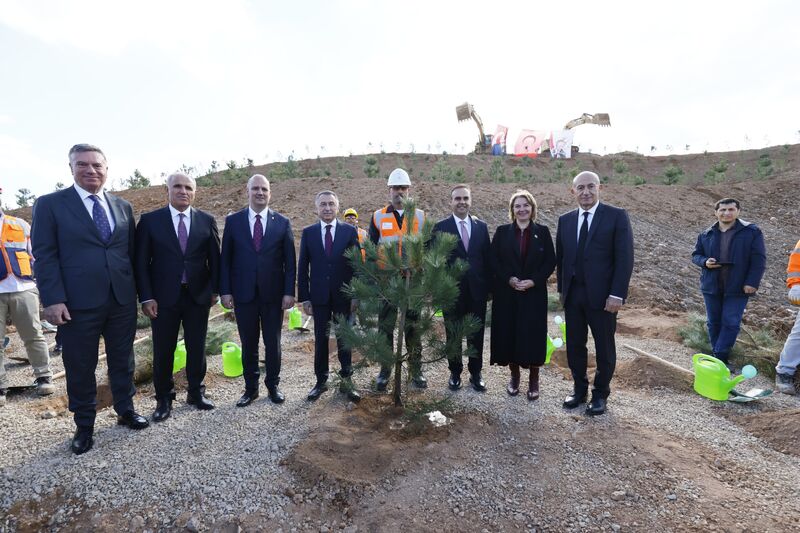
Digital Realty, the cloud and carrier-neutral data center platform, has broken ground on its first data center in Türkiye, a 22 MW facility in Ankara being built through a joint venture with local investment company Rönesans Infrastructure
As announced in September, the joint venture’s first investment is poised to support growing demand for cloud, enterprise, and connectivity infrastructure in Türkiye. Land, power, and permitting had already been secured and Digital Realty expects the facility will be complete in 2028.

“Today’s groundbreaking ceremony in Ankara, Türkiye is a reflection of the long-term commitment and investment we have for our EMEA strategy at Digital Realty,” Paula Cogan, Digital Realty Managing Director and Head of EMEA, posted on LinkedIn. “In partnership with our joint venture, Rönesans Infrastructure, it’s been a truly special ceremony to see our shared vision begin to take shape, particularly in a nation with so much potential to become an even more important hub for digital infrastructure and connectivity.”
The facility in Ankara is the first step for the joint venture, which intends to develop an additional data center in Istanbul. Together, the Ankara and Istanbul facilities are expected to form a highly connected and resilient digital infrastructure platform.
“Positioned at the crossroads of Europe, the Middle East and Asia, Türkiye is emerging as an increasingly important hub for digital transformation, cloud adoption and AI innovation. This expansion complements our growing presence across Southern Europe and the Eastern Mediterranean, strengthens connectivity across our regional platform, and provides customers with greater flexibility, resilience and reach as they scale their digital infrastructure globally,” said Cogan.

Data center capacity in Türkiye is expected to grow from 350 MW in 2025 to 570 MW by 2031, according to Mordor Intelligence. Not only is the country an interconnection bridge between Europe and Asia, but the data center market growth is also being spurred along by a US$ 46.2 billion public digital-infrastructure budget allocated in 2025 as well as growing investment from global hyperscalers and regional telecom groups.