
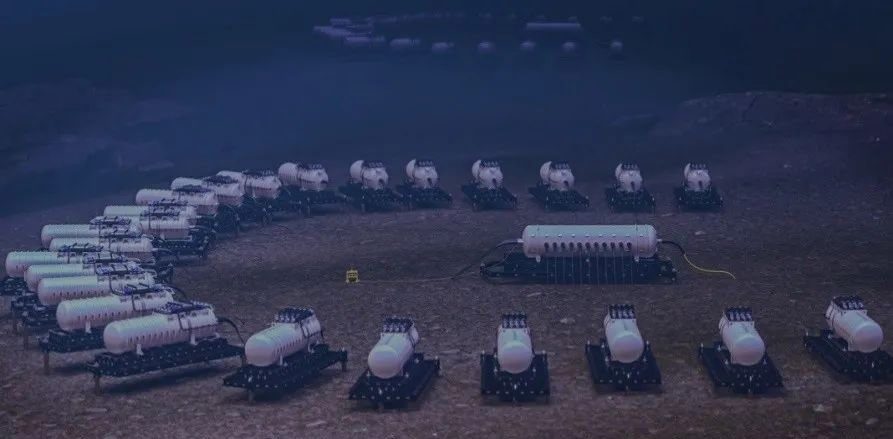
Underwater data centers come with many advantages but can they replace land-based data centers?
In June, China launched its first offshore wind-powered underwater data center (UDC) off the coast of Shanghai. With Hainan having already witnessed the successful commercial deployment of a UDC, what’s new about this project?
The difference this time is that this project, known as the Shanghai Lingang UDC project, is an upgraded 2.0 version powered by an offshore wind farm. According to the developer, Shanghai Hicloud Technology Co., Ltd (Hailanyun), this makes the facility “greener and more commercially competitive.” Hailanyun is a leading Chinese UDC specialist that also built the Hainan UDC.

A UDC is a data center that keeps all the servers and other related facilities in a sealed pressure-resistant chamber, which is then lowered underwater onto the seabed or on a platform close to shore. Power supply and internet connections are relayed through submarine composite cables.
Su Yang, general manager of Hicloud told Xinhua, China’s official news agency that the Lingang project design draws on their experience with their Hainan project which to date, had “zero server failure and no on-site maintenance [was] needed”.
The Hainan UDC has been hailed as a success in China – it claims to have current computing capacity equivalent to “30,000 high-end gaming PCs working simultaneously, completing in one second what would take a standard computer a year to accomplish”. An additional module allows it to handle 7,000 DeepSeek queries per second, apparently.
The history of underwater data centers has leant more towards a rather positive outlook despite some criticisms. Microsoft, credited with pioneering Project Natick, the first underwater data center in the world, has effectively confirmed that it is abandoning the project. It has however somewhat cryptically said it “worked well” and that it is “logistically, environmentally, and economically practical.”
There are several other similar planned installations by American startups, namely Subsea Cloud and NetworkOcean, but nothing concrete has come out of those yet. Though some observers have sounded scepticism on the project, Hicloud is unfazed and is planning to allocate the two-phase project with an initial investment of 1.6 billion yuan (about US$ 222.7 million).
Proof-of-concept
The Lingang UDC’s first phase, a 2.3 MW demonstration facility to be operational in September, is more of a proof-of-concept project serving as a real-time laboratory for monitoring the various impacts of using off-shore wind energy to power a UDC. If successful, it will scale to the second phase with capacity of 24 MW, and a power usage effectiveness (PUE) below 1.15 with over 97 per cent of its power generated from offshore wind farms.
According to Hicloud, the system, consisting of 198 server racks, can deliver enough computing power to train a large language model in just one day.
Anchored 10 kms off Shanghai, in the Lin-gang Special Area of China (Shanghai) Pilot Free Trade Zone, the facility leverages on the cooling effect of sea water to cool its servers. With cooling being practically free, this shaves off 30-40 percent of its electricity bill compared to its land-based counterparts. Cooling typically accounts for 30 – 40 per cent of total data center power consumption.
Additionally, the facility relies almost 97 per cent on offshore wind power, which represents a massive savings on power consumption. It operates a closed-loop water circulation system where the seawater is channelled through radiator-equipped racks. Hence, it does not require freshwater resources or traditional chillers. This again cuts power consumption as well as carbon emissions.
Another advantage is that the sealed vessel can easily be filled with nitrogen gas, after purging the oxygen. With zero oxygen atmosphere, equipment can last longer hence server failure is minimized or practically zero. Microsoft has proven this with Project Natick although it’s only a two-year one module experiment.
As noted by an observer, most IT equipment today probably has only a lifespan of 3- 5 years due to technical obsolescence hence it doesn’t matter even if the equipment can last 10 or 20 years. Moreover, the higher operations, maintenance, and deployment costs at sea would offset some of the savings.
If there is server failure, it just means having to use a floating barge with an appropriate crane system to lift the capsule out to deal with the failure. Or, in some instances, it might require marine salvage teams and specialized vessels.
Adverse impacts
More critically though, critics have pointed out that heat emissions from UDCs would cause lasting damage to the marine ecosystems such as bleached coral reefs, killing off some species of marine life and local ecosystems, among others. Moreover, the long-term effect is still unknown. Some environmentalists are adamant that if more data centers are placed underwater, the cumulative impact, no matter how small, would contribute to global warming.
“Even if the vast ocean can dissipate this heat efficiently, and even if the temperature change is minimal and localised, it would still have an impact because the heat has to go somewhere,” notes a green activist.
“It could even bring invasive species and affect ecological balance,” says James Rix, JLL’s Head of Data Centre and Industrial, Malaysia and Indonesia. Rix also ponders whether it’s the right thing to do “even if it works”, due to the adverse impact on the environment.
Another issue is the potential outages should a natural disaster occur. “When it comes to disaster recovery, there is no emergency power generation for underwater facilities, such as an underwater generator,” he said.
Hicloud has countered with trial data showing the heat emitted has never exceeded one-degree Celsius increase, the threshold above which it is believed there will be some impact on the surrounding marine life. Other issues raised include noise pollution, electromagnetic interference, biofouling and the effect of corrosion.
Swim or sink?
If successful, the implications are massive as it could become a model for the next generation of data centers with sustainability and high-performance computing deeply embedded. It has the potential to solve the most pressing issues currently facing land-based counterparts: scarcity of land, power and water, plus the problem of massive heat generated by high-density servers.
Mainstream adoption could even give a boost to current coastal data center hubs constrained by land shortage, such as Japan, Hong Kong and Singapore. This could place China at the forefront of green computing infrastructure, although countries like South Korea and Japan have also announced plans to explore UDCs.

The fact is, while early results look promising, long-term, differently-located performance still needs more evidence. And there is the serious environmental impact to consider. A more likely scenario, even if the Lingang UDC proves successful, would be UDCs operating alongside land data centers. Challenges remain: marine regulations, environmental laws, long-term maintenance costs, security, and scalability. Independent oversight will be essential whether or not UDCs become mainstream.