
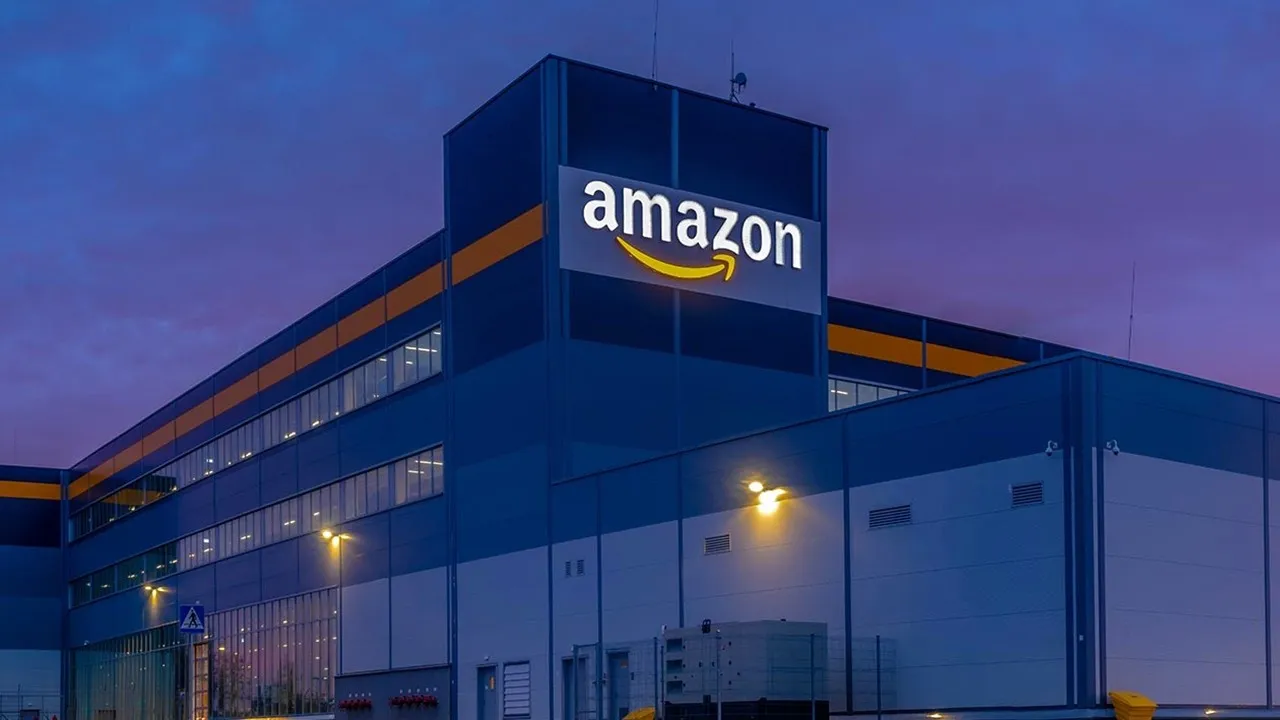
Amazon has announced nine new renewable energy agreements in Australia, adding 430MW of capacity and bringing its total contracted renewable portfolio in the country to around 990MW. The portfolio includes a mix of wind, utility-scale solar, distributed solar, and battery storage projects across New South Wales and Victoria, marking the company’s largest renewable investment in Australia to date.
The agreements are intended to support Amazon’s broader infrastructure expansion, including a previously announced AUD 20 billion investment in data centres to 2029, as demand for cloud and AI workloads increases. The new projects place a strong emphasis on energy storage, with eight of the nine incorporating battery systems. Amazon said this would improve grid reliability while enabling more consistent use of intermittent renewable generation.
The company said it has invested an estimated AUD 2.8 billion in Australian renewable energy projects since 2020, and said its full portfolio would generate enough electricity to power more than half a million homes annually once operational. The announcement also highlights site-specific initiatives, including the use of rehabilitated coal mining land for the Muswellbrook solar project and agricultural co-use at other sites.
Renewables procurement rises alongside energy demand
Amazon’s latest deals reflect a broader trend of hyperscale operators increasing renewable procurement as part of sustainability commitments and to secure power supply for expanding data centre fleets. However, the scale of energy demand linked to AI infrastructure continues to grow rapidly. According to the International Energy Agency, global data centre electricity consumption is projected to roughly double from around 485TWh in 2025 to 950TWh by 2030, accounting for approximately 3% of total global electricity demand.
Within that, AI-focused data centres are expected to grow faster, with electricity consumption from these facilities set to triple over the same period. The IEA also notes that while efficiency gains in hardware and software are improving energy use per task, these are being offset by the rapid expansion of more energy-intensive AI applications, including video generation and agentic systems.
Linking renewables to data centre growth
Amazon said its renewable investments are designed to add new carbon-free energy to the grid rather than simply offset its own consumption. The company claims to be one of the largest corporate buyers of renewable energy globally and was the largest purchaser of carbon-free energy in Australia in 2025, according to BloombergNEF.
At the same time, the relationship between renewable procurement and data centre energy use remains complex. While power purchase agreements increase renewable capacity on the grid, data centres continue to draw electricity from local grids in real time, often requiring additional generation and network investment to meet peak demand.
The IEA has highlighted that rapid growth in data centre load can create pressure on electricity systems, particularly where infrastructure development lags demand, potentially requiring new dispatchable capacity alongside renewables.
Infrastructure, water and sustainability
Alongside energy procurement, Amazon Web Services is also expanding sustainability initiatives in Australia, including the use of treated wastewater for data centre cooling as part of its goal to become water positive by 2030. The company’s broader infrastructure build-out is positioned around supporting AI and cloud adoption across Australia, with increasing focus on high-density, energy-intensive workloads.