
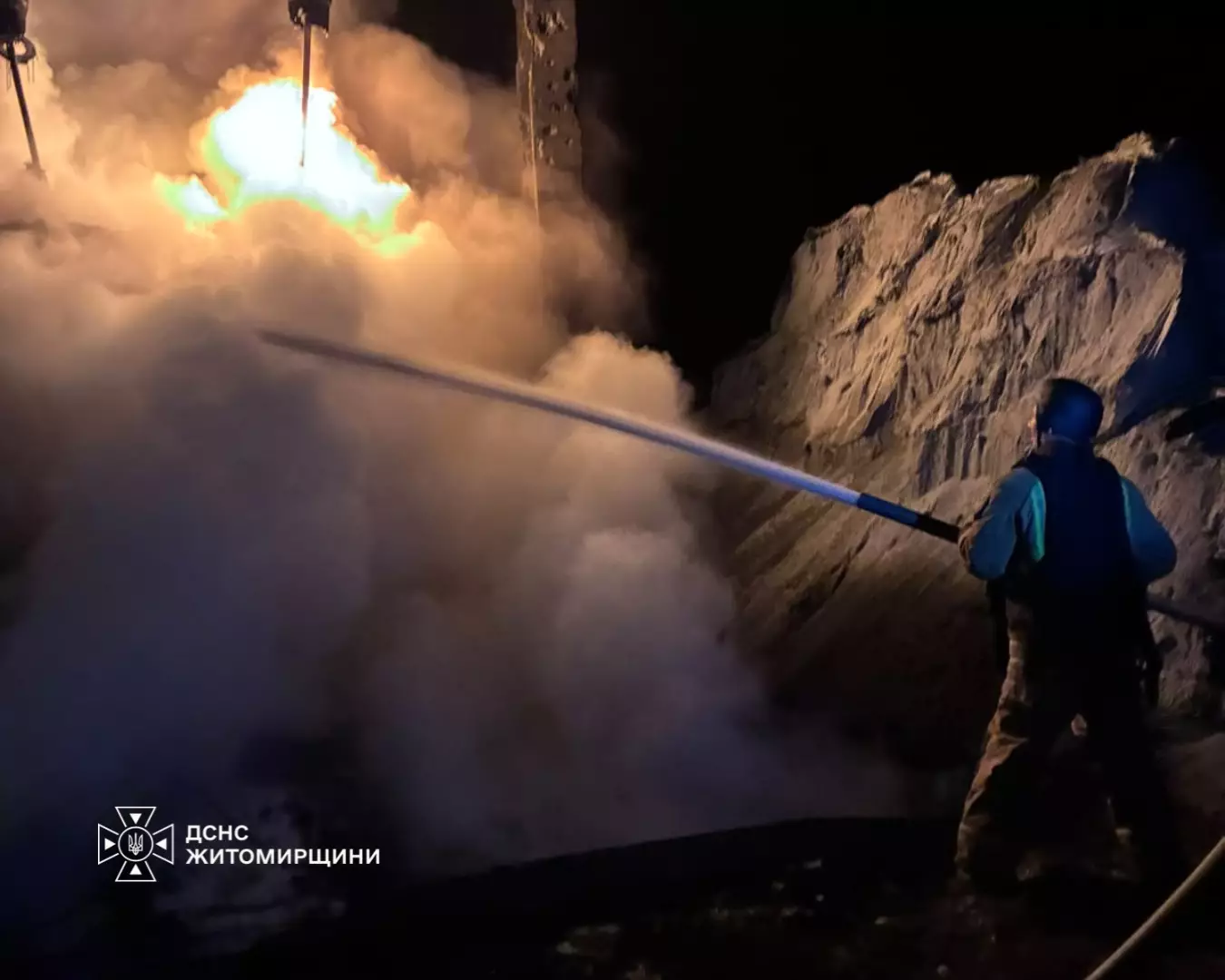
Ukrainian forces have struck several sites in Russia’s St. Petersburg region overnight on October 17-18, including the St. Petersburg Oil Terminal, a VKontakte (VK) data center and a logistics center belonging to retailer Ozon.
VK is one of Russia’s largest technology companies, confirmed that its data center in Novosergievka had been hit by a drone but its services remained operational. However, users reported connection problems and outages across VK and its affiliated platforms as reported by The Kyiv Independent.

The attacks also reportedly targeted the Ruchi oil depot and a nearby bridge. St. Petersburg Governor Alexander Beglov confirmed fires at the oil facilities. It remains unclear whether the disruptions were caused by damage to the data center or a nearby electrical substation.
The recent strike marks another attack on Russian internet infrastructure as readers will recall a series of Ukrainian drone attacks between October 12-14, had caused significant disruption to Russian technology giant Yandex, damaging three of its data centers and affecting dozens of online services across the country. Another attack targeted a data center under construction for Russian state lender Sberbank in Balakovo, Saratov region.
These attacks were believed to be retaliations as Russia had attacked Ukrainian data centers in mid and late September that damaged facilities used by internet providers UTELS and Pavutyna, BeMobile data center was affected by a Russian drone attack, UCloud, which provides services from the facility, De Novo data center, one of Ukraine’s largest commercial data centers.
Russia has also been blamed for a series of attacks on Starlink equipment facilities located in Lithuania and Bulgaria as part of Russia’s hybrid war against Europe.
“At around 2:00 AM, there was an attempt to burn satellite antennas and a control unit. Incendiary liquids were found, along with containers ranging in capacity from three to 10 litres. The fact is that this was clearly an attempted act of sabotage or diversion, as we are seeing similar actions repeated across Europe”, Mindaugas Sinkevičius, Prime Minister, Lithuania, told LRT Radio. “It is obvious that this is part of Russia’s hybrid war, involving acts of sabotage. We will learn more about who ordered it, how everything happened and who was behind it. It is likely that it is already clear who commissioned it is the Russian side.”
Roumen Radev, Prime Minister, Bulgarian, confirmed on October 14 that Starlink antennas had been set on fire at a site near Sofia. He declined to provide further details, citing the ongoing investigation as reported by Ukrinform. Radev addressed the incident during a parliamentary hearing on attacks against merchant ships in the Black Sea and the arson of equipment used to connect to Starlink satellites.

These strikes highlight Ukraine’s expanding campaign against Russian energy, logistics and digital infrastructure, extending attacks beyond military targets to facilities supporting the country’s economic and communications networks. While Russia’s alleged attack on Starlink’s equipment facilities could expand the war to new fronts and escalate the regional conflict to other parts of Europe.