
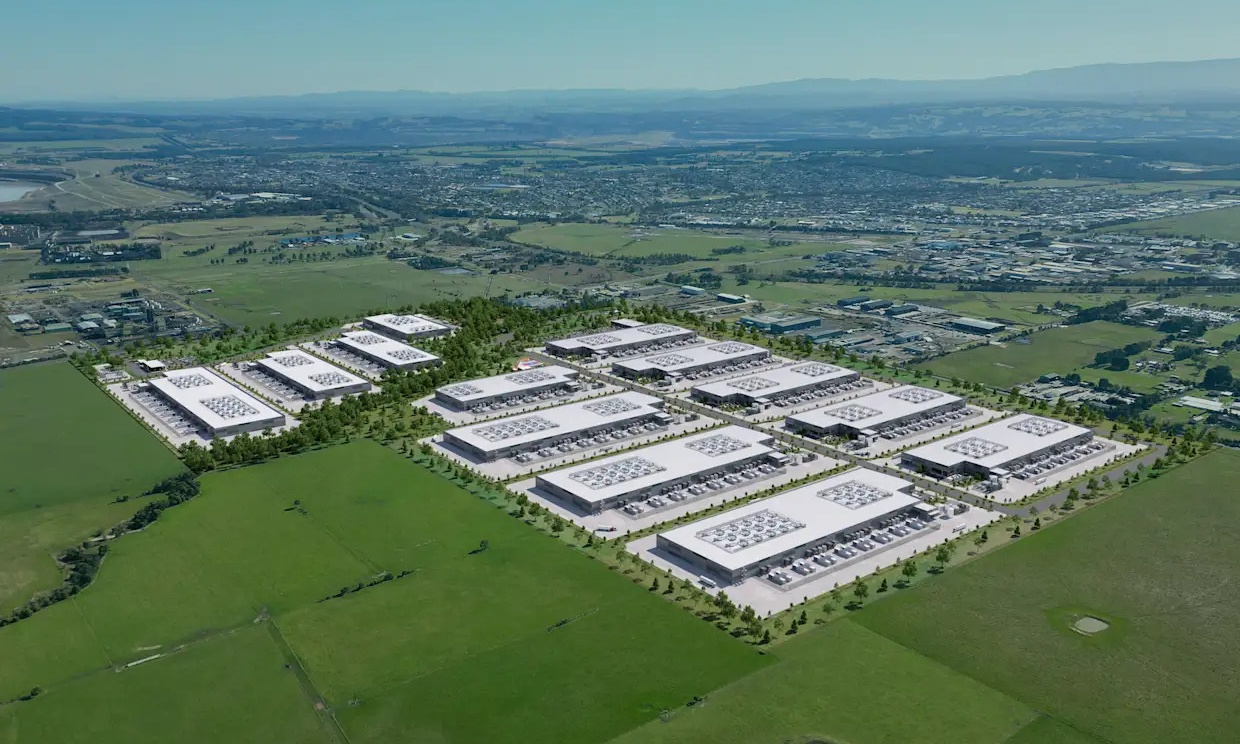
Australian state Victoria’s proposed data centre rules would require developers to fund network upgrades, move water-intensive cooling away from drinking water supplies and maintain a 150-metre buffer from residential buildings. The Victorian government has released a Sustainable Data Centre Action Plan setting out new expectations for the industry, including requirements covering land use, energy supply, water consumption and local community benefits.
The plan says data centres must cover connection costs and network augmentations directly resulting from new investment, including necessary upstream upgrades. Operators would also be expected to participate in demand-flexibility services to the maximum extent technically and commercially possible.
The proposed arrangements arrive as Victoria seeks to attract further data centre investment while managing pressure on electricity infrastructure, water supplies and communities. The government says the plan will operate alongside existing planning, environmental, energy and water frameworks. It will be supported by a new data centre category within the planning system, as well as new energy and water referral and notification controls.
New location requirements
Under the proposed planning controls, data centres would be prohibited on residential-zoned land. A 150-metre buffer between a residential building and a proposed data centre building would also be introduced and enforced through the planning system.
Data centres in rural zones would be prohibited unless they were located near, and able to be serviced by, infrastructure critical to their operation, like major transmission infrastructure, substations, renewable energy facilities, battery storage or recycled-water infrastructure – but not connectivity.
The plan also proposes a statewide planning policy covering data centre location, design, scale and infrastructure requirements. More detailed siting and built-form guidance is scheduled to be developed with stakeholder input in 2027.
The government says the Minister for Planning would remain the responsible authority for data centre applications progressed through the Development Facilitation Program, while other applications would remain with local councils. However, the plan proposes extending referral status to WorkSafe Victoria, Fire Rescue Victoria, VicGrid and relevant water corporations for all data centre applications, including those determined by councils.
Recycled water preferred for cooling
The action plan takes a clear position on water-intensive cooling systems, stating that facilities using evaporative, adiabatic or other open-loop systems are expected to use recycled or other non-drinking water.
Where those supplies are not available, operators would be expected to agree a plan with their water corporation to offset interim drinking-water use, potentially through funding agreements or water-efficiency programmes. Facilities relying on drinking water as an interim measure would also need to be designed so that consumption can be reduced during drought restrictions.
The proposed water-efficiency targets are a design water usage effectiveness ratio of no more than 1.0 for potable water and 1.6 for non-potable water, unless an alternative is agreed with the relevant water corporation. Operators would also be expected to measure and publicly report water consumption.
The plan states that developers must meet the full cost of water infrastructure required to service their connection, including contributions where data centre demand brings forward network upgrades that other customers would otherwise have funded later.
The government points to the Melton Recycled Water Plant’s supply of an Amazon Web Services data centre as an example of direct recycled-water use for data centre cooling.
Renewable power and emissions
The proposed energy requirements would require operators to offset their actual electricity consumption by investing in new renewable generation and storage. The plan says detailed compliance, verification and firming requirements will be finalised alongside Commonwealth standards.
Developers would also be required to cover connection costs and network augmentations arising directly from new investment, including upstream upgrades.
Backup diesel generation would be restricted to emergencies and mandatory testing. Operators would be expected to use best-available technology, continuously monitor and report runtime and emissions, and manage residual greenhouse gas and air-quality impacts.
The plan also proposes that data centres achieve high levels of power usage effectiveness, measured against recognised national standards.
Local benefits and implementation
Victoria said it intends to work with councils, industry and communities to establish a Local Investment Guarantee for data centre developments.
Potential commitments include local employment, training partnerships, First Nations engagement, local procurement and investment in community facilities, parks and trees. Not all elements of the plan will take effect immediately. Detailed planning guidance is scheduled for 2027, while Commonwealth legislation covering data centre energy, water and land-use standards is intended for early 2027.
The Victorian government also plans to amend the planning scheme to extend mandatory referral arrangements and develop further guidance on renewable energy, water infrastructure and local benefits. W.Media has asked whether the new requirements will apply to projects already in the planning system, and which measures will take effect immediately versus requiring further planning amendments or legislation. The government had not provided a response at the time of publication.