
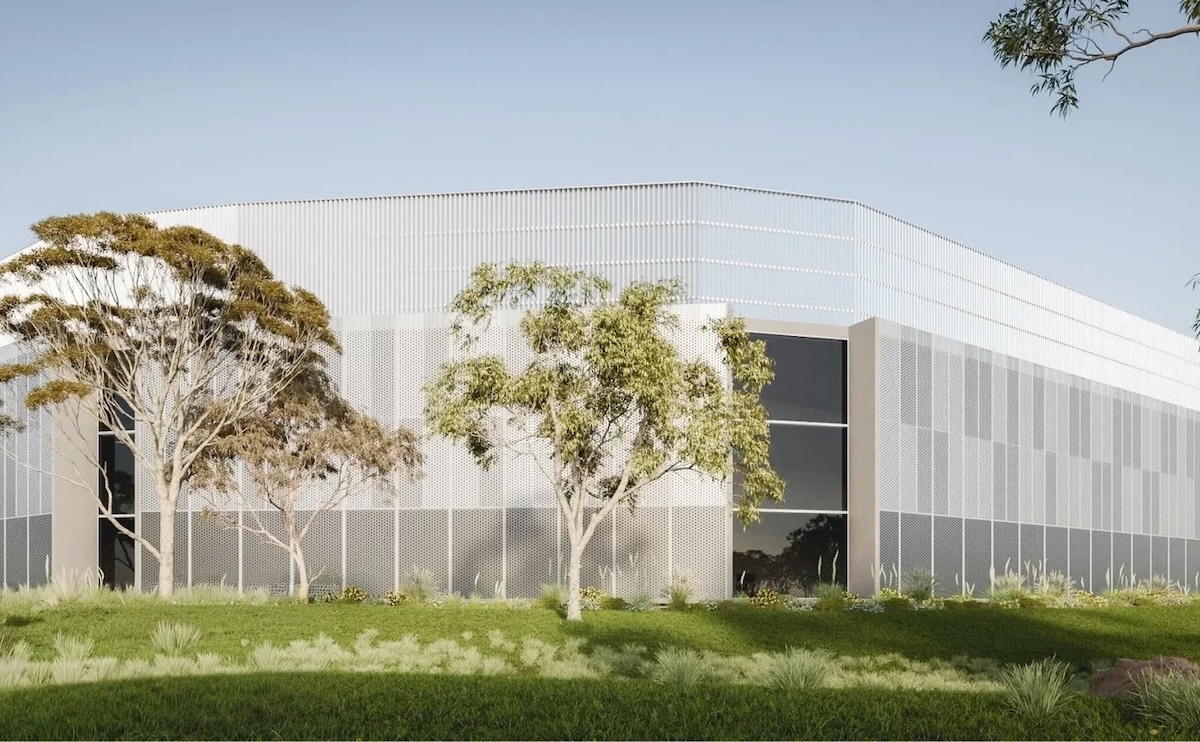
Australia’s Whittlesea City Council has asked the Victorian government to improve transparency and regulation around data centre developments, as a new 200MW Dover DC project moves through Victoria’s state-led planning system in South Morang.
Dover1 SM2 Pty Ltd’s application for a data centre at 165 Williamsons Road, South Morang was received by the Victorian government on 14 August. The application is being assessed through the Development Facilitation Program (DFP) and covers the use and development of the land for a data centre, vegetation removal and signage.
Dover identifies the project as SM1B and says it will provide up to 200MW of high-efficiency infrastructure on approximately 1.8 hectares of an 8.7-hectare site next to the South Morang Terminal Station. The project is the second data centre proposed by Dover in South Morang.
Second South Morang project
Dover’s existing SM1A project is located at 765 Plenty Road and 525–535 McDonalds Road in South Morang. The company says that facility is designed to provide up to 120MW. SM1A received planning approval from the Victorian Planning Minister in September 2024 through the Development Facilitation Program, with further amendments approved in 2025.
SM1B would therefore bring the stated capacity of Dover’s two South Morang projects to up to 320MW, assuming both are developed to their stated maximum capacities. Dover says SM1B will comprise a three-storey data hall building directly adjacent to the South Morang Terminal Station.
The Victorian government’s planning register does not disclose the project’s IT load, total facility demand or detailed electrical configuration. It currently records the application as a planning permit application under the DFP, with no decision recorded.
Council seeks greater transparency
The new application comes as the local council for South Morang, Whittlesea Council, seeks a greater role in decisions around data centre development. In its 18 August council meeting, Whittlesea said councillors had raised concerns about the transparency, regulation and planning of data centres, and that Mayor Lawrie Cox would write to the Victorian government about the issue.
The move follows the approval of Dover’s SM1A project through the state planning system. Council was not the decision-maker for that application, which was assessed through the Development Facilitation Program.
The division of responsibility is becoming increasingly relevant as Victoria accommodates a growing pipeline of data centre projects through state-level planning mechanisms.
The issue is not confined to Whittlesea. The City of Melbourne has also begun developing a policy position on data centres and AI infrastructure, with its draft position paper now open for consultation. The council says many of the key decisions about data centres are made by the Victorian and Australian governments, and is seeking to influence future policy through local planning, partnerships and advocacy.
The draft position paper calls for planning controls that distinguish between different types and scales of data centres and require assessment of land use, design, amenity, energy, water, emissions, infrastructure and cumulative impacts. It also proposes consistent, comparable and publicly accessible data on energy, water, emissions, noise and backup generation.
The City is also advocating for independently assessed and publicly disclosed energy and water efficiency ratings, and for applicants to deliver and report on public benefits and respond to local needs as part of the planning approval process.
The draft position is currently out for consultation until 30 September, with a final position paper expected to return to the Future Melbourne Committee in February 2027.
Power and water
Dover says the SM1B site has been designed around its proximity to the South Morang Terminal Station, with power, water and local amenity among the areas where it has undertaken consultation with government departments and agencies. The company says its water strategy has been developed in consultation with Yarra Valley Water and is designed around demand-management requirements.
Dover has stated a target of less than one litre of water per kilowatt-hour and says recycled water could be incorporated if an appropriate supply and connection become available. The developer has also said the project will include upgrades to the Heath’s Court Drain and improvements to the McDonalds Road frontage, including a shared-use path and widened nature strips.
Dover says the project has been designed to meet mandated noise and amenity limits, and that a noise impact assessment found noise levels within allowable limits under worst-case operating scenarios. The company says it is also undertaking further baseline monitoring ahead of regulatory requirements.
Dover currently expects construction of the South Morang project to begin in late 2026 or early 2027, subject to approvals, with initial operations targeted for late 2028 or early 2029 and capacity ramp-up continuing into 2031 and beyond.
However, detailed technical information about SM1B’s IT load, data hall configuration, cooling systems, backup power architecture and ultimate electricity demand has not yet been disclosed in the Victorian planning register.
State planning system
The use of the Development Facilitation Program for the South Morang projects places the development within a state planning pathway rather than leaving the local council as the final decision-maker.
Victoria’s planning framework specifically identifies data centres as eligible for assessment through Clause 53.22 of the Victorian Planning Provisions where the relevant thresholds are met. The City of Melbourne’s draft position paper notes that some eligible projects can be assessed directly by the Planning Minister through the DFP.
That does not remove the ability of local councils to participate in the process or advocate on individual projects, but it means the approval pathway is ultimately determined at state level for projects proceeding through the DFP.
The Victorian Government is simultaneously developing its own Sustainable Data Centre Action Plan, covering areas including infrastructure and connectivity, energy and grid readiness, sustainable water management and government coordination.
For Whittlesea, however, the issue is now more immediate: another large data centre proposal has entered the state planning system in the same municipality where Council is asking for greater transparency and local involvement.
The SM1B application remains under assessment and no planning permit has been issued.
Dover responds
Dover told W.Media the two developments comprising the South Morang Data Centre Project have been identified for assessment through the state’s Development Facilitation Program, with the Planning Minister as the responsible authority. The company said the pre-application process for SM1B involved “considerable engagement” with relevant authorities and stakeholders, including on power, water use and local amenity.
“Independent of the particular planning decision-maker, the responsible project group is committed to developing the project sustainably and mitigating its impact on the local community,” the Dover spokesperson said. The company said stakeholder engagement remained central to its approach and that it would continue to listen to community feedback and keep the public informed about the project.
Dover also described Whittlesea City Council as a “valued local stakeholder” and said it welcomed the opportunity to continue working constructively with the council.