
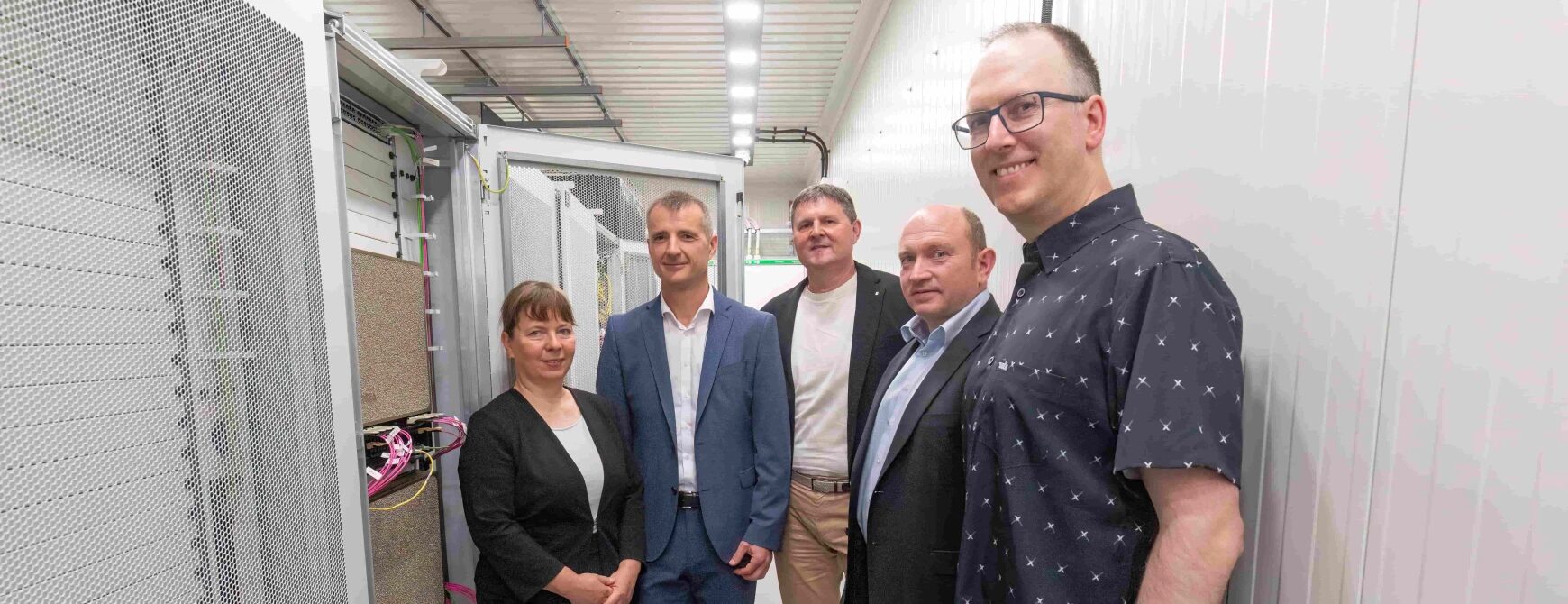
The Faculty of Computer Science and Informatics at the University of Ljubljana (UL FRI) has launched FRIDA, a new high-performance computing infrastructure designed for artificial intelligence, machine learning, large language models, scientific computing and large-scale data processing.
FRIDA is built as a modular container data center with hybrid cooling, combining air cooling with liquid cooling directly on chips to handle the high thermal demands of modern AI servers. It is an academic supercomputer platform for researchers, students and industry partners working on advanced computing projects.

The system is focused on AI workloads and is intended to support the development and testing of new technologies while the infrastructure will support projects including the further development of the Slovenian large language model GaMS and allow companies and public institutions to test AI applications and prototype new systems as described in a press release from the University of Ljubljana.
The launch event was attended by representatives from academia, government and companies involved in technology development.
“FRIDA directly supports the mission of FRI, one of the key carriers of technological development in Slovenia, as it connects top research knowledge with state-of-the-art infrastructure and enables breakthroughs in the field of UI and supercomputing,” said Associate Prof. Dr. Mojca Ciglarič, Dean, UL FRI. “It offers the Slovenian economy a platform for testing future technologies that we believe represent a major competitive advantage. FRIDA supports innovation and opens up new possibilities for interdisciplinary projects by researchers with business and society.”
The supercomputer’s core includes 104 GPU accelerators from seven generations, including 64 latest-generation units connected through a high-performance network. The infrastructure uses NVIDIA Blackwell B200 and B300 AI graphics processing units and is currently the most powerful AI-focused computing system in Slovenia.

The system complements European high-performance computing initiatives and provides additional computing capacity for research and industry projects. It is also designed to reduce AI model training times from weeks to hours or days, depending on the workload and deliver to 708 petaflops of computing performance for lower-precision operations, with a potential peak performance of up to 1.42 exaflops.