
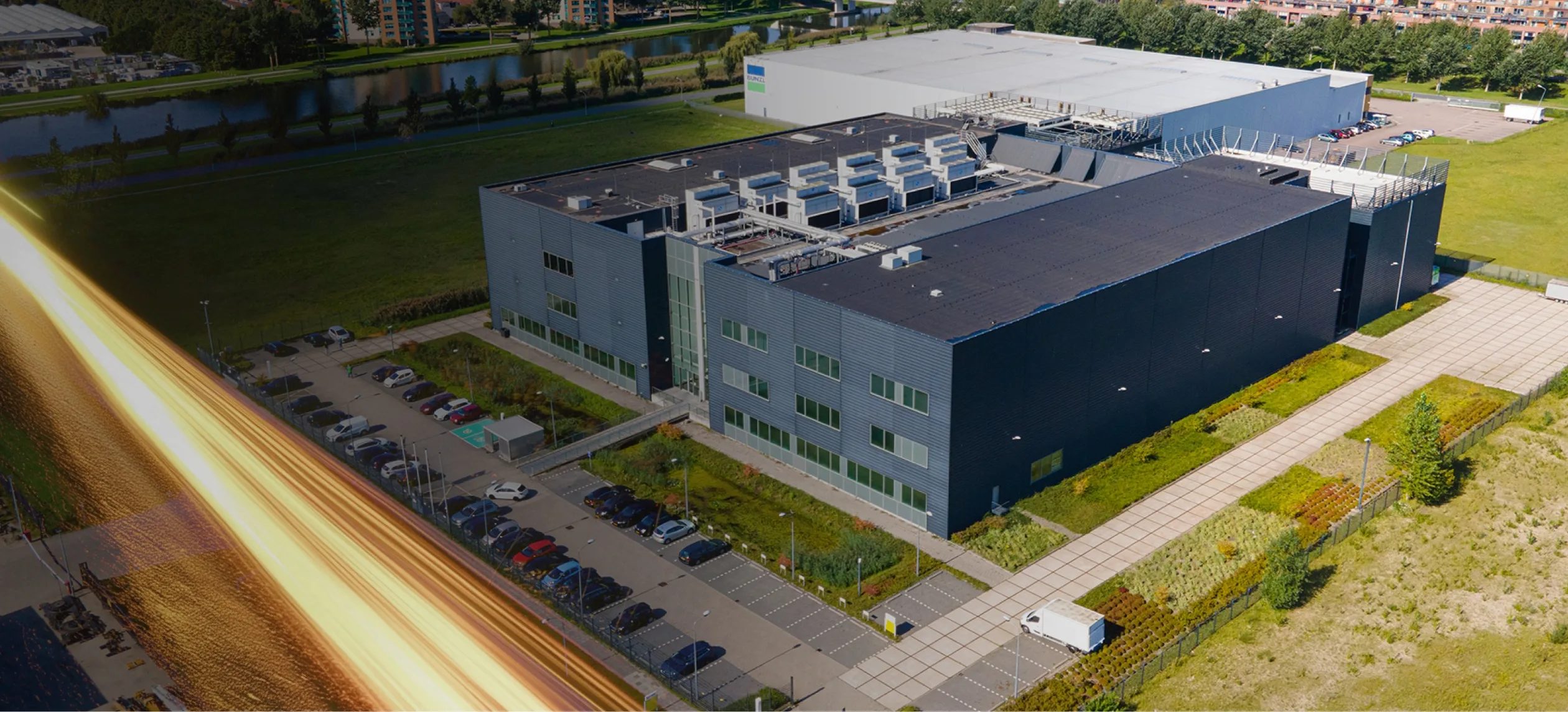
A major fire broke out at a NorthC data center facility in Almere, Netherlands, on Thursday morning, causing widespread disruptions. According to local media reports, Utrecht university systems went offline, healthcare services faced disruptions, and emergency communications for public transport were disabled in the Utrecht province because of the fire.
According to updates on NorthC’s own website, the fire started at the company’s data center on Rondebeltweg in Almere at around 8:45 A.M on Thursday, May 7. The fire continued to burn during the day in the rear section of the building, where technical facilities are located.

By 3:15 P.M, the fire brigade confirmed that several more hours would be needed to fully control the fire and safely release the building, preventing NorthC teams from entering the site. Technical teams began preparing multiple recovery scenarios to restore power as quickly as possible once access was granted. At that stage, the exact cause of the fire and the full extent of the damage remained unclear.
By 6:30 P.M, the situation remained largely unchanged, with firefighters still working to contain the blaze. NorthC confirmed that emergency response and restoration plans were ready to be activated immediately after the building became accessible.
However, at 8:50 P.M, the situation improved significantly; the incident was scaled down to GRIP 1, the NL-Alert was withdrawn, and authorities confirmed the fire was under control. NorthC announced that its teams would enter the building later that night to begin an initial inspection, assess the damage, and determine the fastest path to restoring power and connectivity.
Shortly after midnight, at 12:35 A.M, the situation was further reduced to GRIP 0, indicating that emergency services had full control of the incident and that parts of the building had been released for technical work. NorthC experts remained on site conducting detailed damage assessments while preparations began for temporary power installations and reconnecting systems. The company said further updates would follow once there was more clarity on the expected recovery timeline.
Alexandra Schless, CEO, NorthC Datacenter, said, “All people present were evacuated from the building in time. We work closely with the fire brigade and the safety region to get the situation under control.”
As per protocol to protect against a Distributed Denial of Service (DDoS) incident, the Netherland Internet exchange (NL-ix) responded and notified its user by stating on its website “Due to a fire-related incident at the NorthC Datacenter Almere facility, services hosted at or routed through this location are currently impacted. Affected customers have been notified.”
The incident exposed how dependent critical Dutch infrastructure is on a small number of physical data centers. Utrecht University reported major outages affecting websites, applications, and logins after several of its servers went offline. SURF, the organization that provides ICT infrastructure for Dutch education and research institutions, confirmed disruptions across multiple universities and research organizations according to a report from TheNextWeb.
Healthcare services were affected as billing provider infomedics became unreachable by phone and chat, while several GP practices and pharmacies across the country reported system outages expected to last the rest of the day.
Transdev, which operates public transportation such as buses and trams in Utrecht province, suffered the most serious impact, losing connection with its regional control center because the system’s servers were hosted at the Almere facility without a functioning backup location. Drivers temporarily lost access to emergency communication systems, including onboard emergency buttons.

The NorthC data center fire has raised concerns about the resilience of the Netherlands’ rapidly expanding digital infrastructure, and the risks posed when essential services depend on a single data center, cannot be ignored.