
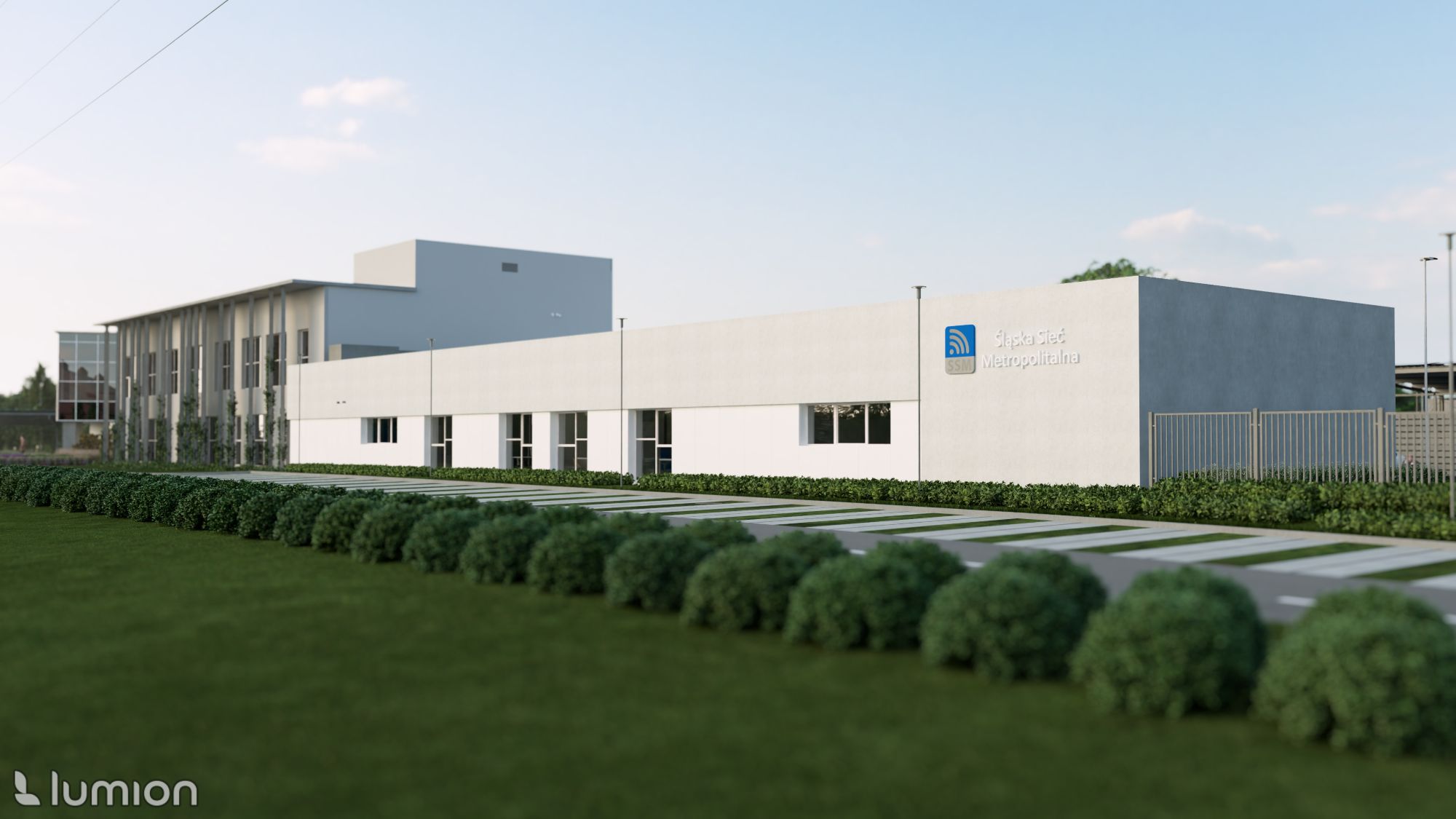
Gliwice, a city located in Poland is planning to build its own data center that will be delivered by the municipal company Śląska Sieć Metropolitalna. The facility is intended to host and process municipal IT systems and safeguard public services from disruptions such as technical failures or cyberattacks. The project is scheduled for completion by late 2028 and will be located on land between Boykowska and Toruńska streets.
According to a statement by the Gliwice government, the decision to proceed with construction became legally binding in March 2026 after the relevant administrative approval was issued. City authorities present the investment as a response to growing dependence on digital systems in public administration and increasing cybersecurity risks. These include obligations stemming from the EU’s NIS2 Directive and Poland’s national cybersecurity regulations, which require public institutions to strengthen protection of their IT infrastructure and improve incident response capabilities.

The planned facility will follow the PN-EN 50600 standard, which sets requirements for the design and operation of data centers, including power supply, cooling, and physical security. The city aims for a Class 3 level of resilience, which is intended to allow continuous operation even if individual system components fail. This involves redundancy in critical systems and the ability to carry out maintenance without shutting down services.
The data center will include a main server building with separated security zones, as well as an additional technical and warehouse building. The infrastructure will be supported by two independent transformer stations and a dual power supply system fed from different sources. Backup generators and UPS systems will provide emergency electricity in case of outages. Cooling systems designed for high-density IT equipment will regulate temperature, while fire protection systems will be adapted for server environments and will not rely on water-based suppression.
The city also plans to secure telecommunications connectivity through multiple independent cable routes and cooperation with several operators. This is intended to ensure that if one connection fails, data traffic can be automatically redirected through another. A photovoltaic installation is also planned to partially supply electricity to the facility and reduce operating costs.
The data center will be integrated with Gliwice’s existing Security Operations Center, which monitors IT systems and responds to incidents. This integration is intended to centralize oversight of municipal systems and improve detection and response times in case of failures or security incidents.

The project is also linked to broader cooperation between local governments, including information-sharing initiatives on cybersecurity threats. The facility is part of a shift in how municipalities manage digital infrastructure, treating it as a core element of service continuity rather than a supporting technical system.