
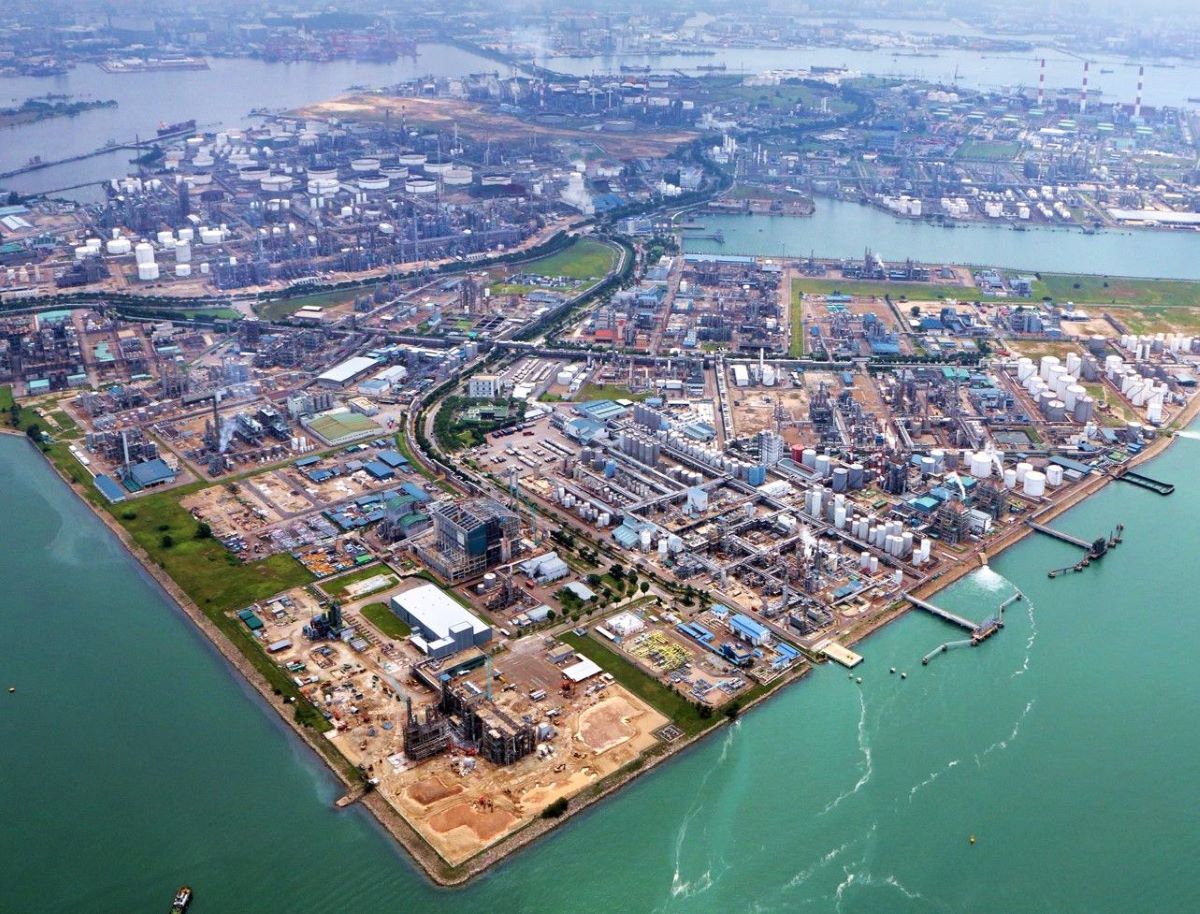
Singapore’s plan for a 700MW data center park on Jurong Island is as much about kickstarting a renewables economy as it is about expanding capacity.
Jurong Island is one of the world’s largest energy and chemicals hubs, housing over 100 companies with investments of more than S$50 billion. It is also the site of a massive land reclamation project, completed in 2009, that merged seven smaller southern islands into one.
Now, Jurong Island is set for another transformation. A multi-agency plan for a data center park of up to 700MW on the island was unveiled late last year, catching the attention of data center operators across the region. Why is this happening, and what is it about data centers that makes them perfectly suited for Jurong Island?
Renewables hub
To understand why Singapore is building data centers on Jurong Island, we must first start with its attempt to meet its climate commitments. Singapore takes these seriously, and has a plan to reduce its emissions to 60 MtCO₂e, or megatonnes of carbon dioxide equivalent, and to achieve net-zero by 2050.
For a tiny, densely-populated island state, this is a herculean task. After all, even the ongoing initiative to pack much of its surface with solar panels, including reservoirs and the top of high-rise apartments, would yield less than 7% of its total energy requirements by 2030 by even the most optimistic estimate.
The only rational approach would be to import renewables. And while doing that, why not transform Jurong Island into a renewables hub? It is not as far-fetched as it might sound. After all, Jurong Island is an undisputed oil hub, complete with massive refining, storage, and trading operations, despite Singapore having no indigenous oil reserves.
But oil has the advantage of established global supply chains built over decades. Renewables such as hydrogen do not, and face a supply and demand conundrum. Producers won’t build the needed plants if there’s no demand. Consumers can’t move ahead if there’s no supply. Shippers can’t get the financing they need to build a new generation of specialized shipping vessels to transport low-carbon fuel without proven demand. It is precisely to address this gap that Singapore is building new hydrogen-ready power plants. There will be at least nine by 2030, and they are all located on Jurong Island.
A catalyst for renewables
While decarbonizing the power sector is essential to achieving these targets, data centers can play an important role in Singapore’s energy transition journey, too. As a top data center hub, the aim is to leverage this demand to accelerate the process, by using data centers as a catalyst in two distinct areas: pioneering nascent low-carbon technologies, and importing low-carbon electricity in the form of carriers such as hydrogen and ammonia.
This is why the second Data Centre Call for Application (DC-CFA2), which has emerged as the main route to building new data centers in Singapore, was crafted the way it was. It stipulates a requirement for low-carbon fuel sources for at least 50% of energy needs. This is an incredibly high standard, and has no precedent as a national policy anywhere else without an abundance of renewables.
To help data center operators meet this bar, the DC-CFA2 has defined eligible green energy pathways for access to the “at least” 200MW of new data center capacity. These include biomethane, low-carbon ammonia, low-carbon hydrogen, fuel cells with carbon capture, and photovoltaics in the form of vertical building-integrated or building-applied varieties. The Jurong Island data center park, with its planned capacity of up to 700MW, is expected to be a key site for this new wave of capacity.
Beyond renewables
But the case for Jurong Island isn’t just about renewables. The island was built with an integrated ecosystem and infrastructure in mind. Shared services and utilities, delivered by utility providers on Jurong Island, reduce capital outlay, lower operating costs, and allow companies to begin operations quickly.
Though data centers don’t need a lot of the shared infrastructure created for the petroleum industry, some existing services make sense, such as demineralized water, water for firefighting, and seawater cooling circuits, along with wastewater treatment facilities. Others could be explored, including district cooling, pooled diesel fuel storage, and off-site Battery Energy Storage Systems (BESS). The idea is to leverage economies of scale for cost savings, or to tap into capabilities that would otherwise not be practical, such as off-site BESS.

Still, there is no shying away from the fact that this will increase data center costs at a location that is already one of the priciest in the world. Is the data center sector paying an unfair price? Perhaps. But the payoff isn’t just greener data centers. Cracking the puzzle of importing renewable energy at scale and at competitive prices will open the floodgates to renewables. If Singapore succeeds, it won’t just have redefined sustainable data centers. It will have removed the single biggest constraint to building them.