
Following the conditional two-week ceasefire between the US and Iran, and Iran’s promise to open up the Hormuz Strait as part of the ceasefire, the whole world breathed a sigh of relief amid a sharp fall in oil prices hours after the announcement. No doubt it’s a fragile truce as the parties will still have a lot more tough negotiations to do to bring about lasting peace in the Middle East.
The closure of the Hormuz Strait where 20 per cent of global oil flows has resulted in a global energy crisis and fears of recession. Asia is particularly affected as 80 per cent of the oil and 90 per cent of the LNG that passes through Hormuz is bound for Asian markets. That, according to Ember, an energy think tank, accounts for about 40 per cent of Asian oil demand and over 25 per cent of Asian LNG imports. That’s the main source of oil supply for countries like Japan, South Korea, Thailand and the Philippines. The strait is also a major route for fertilisers, aluminium, sulphur and ammonia hence, the closure has caused widespread panic about global supply chains. It has the potential to upend entire industries such as agriculture and digital infrastructure, through delays and shortages.

But there is a permanent solution to this and it’s already underway even before the start of the US-Iran war, says Ember. Scaling ‘electrotech’ – defined as new technology to generate, transport, store and use energy – could replace fossil fuels and cut its imports by 70 per cent thus saving about US$ 1.3 trillion globally each year. Once ‘electrotech’ is purchased and deployed, it lasts for decades, providing insulation from fossil fuel price fluctuations,” Ember reckons. “Electrotech is already at the scale and price to cushion shocks,” the think tank states in its recent report entitled “The energy security fallout: from fossil fuel fragility to electric independence.”
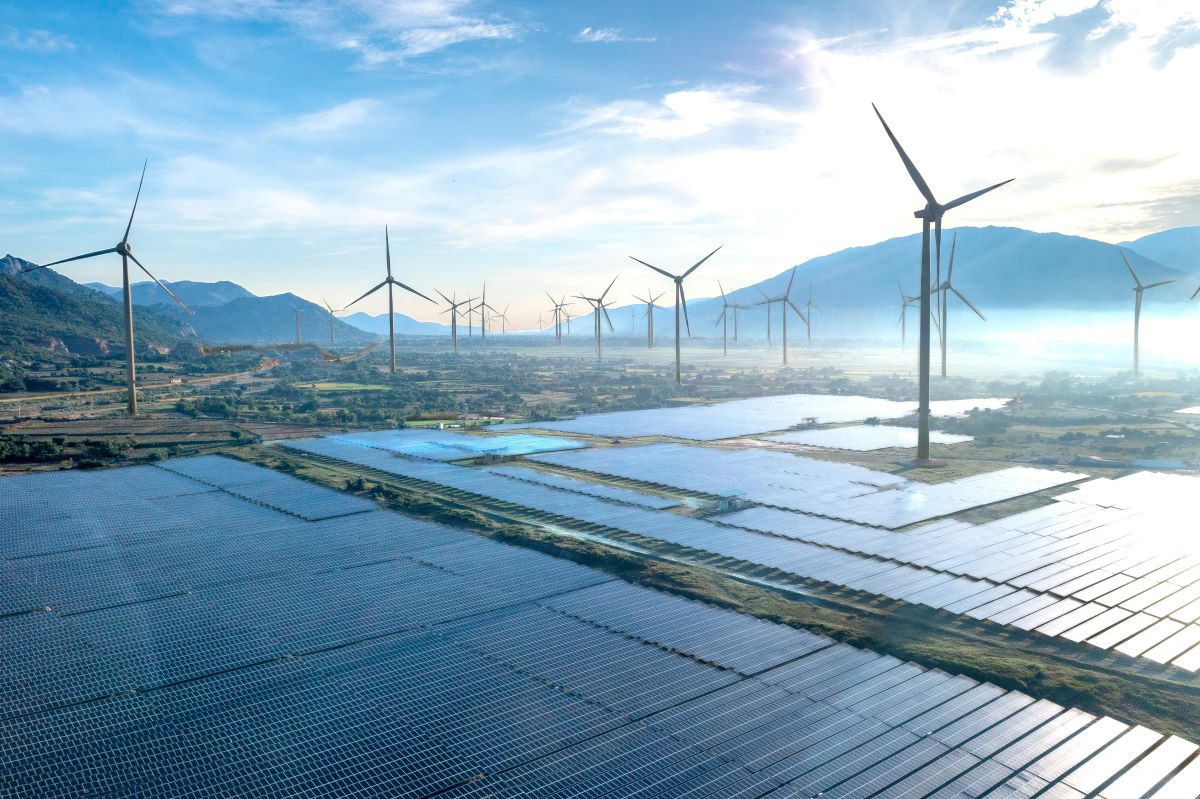
Examples of what constitutes electrotech include renewable energy from solar and wind, demand from electric vehicles (EV) and heat pumps, and grid technologies such as batteries and digitalisation.
According to Ember’s calculations, electric vehicles worldwide had replaced oil consumption equivalent to 70 per cent of Iran’s exports in 2025. Further, its calculations showed global solar growth in 2025 alone could displace gas-fired electricity equivalent to all LNG exports through the Strait of Hormuz in 2025. During that year, 82 million tonnes of LNG went through the strait; used in gas power plants, that could generate about 600 TWh of electricity. The IEA calculated that global solar generation rose by more than 600 TWh in 2025, according to Ember.
Hence, it looks like the feared crisis would actually accelerate what was already underway – the transition to renewables. In my opinion last week, I have stated that the war would speed up the transition to renewables as nations source urgently for alternative energy so as to be less dependent on oil and LNG.
Ember is of the view that countries can affordably slash imported fuels across the whole economy. “For many, this is already cushioning the blow as the technology to slash fossil fuel import dependency already exists. Proven technologies can electrify over three-quarters of the global economy. And [almost] every country in the world has enough wind and solar potential to power that demand with home-grown energy,” states the think tank.
“If all three – solar and wind, EVs and heat pumps – were scaled to replace imported fossil fuels in their respective sectors, importers could reduce their bill by around 70 per cent.”
Ember gave the example of the solar panel, which, once installed, produces power for three decades with no fuel cost, no price increase or supply risk compared to fossil fuels which require continuous imports
The think tank adds that since the 2022 energy crisis (due to the Russia-Ukraine war), electrotech has become cheaper, better, and more readily available. “Solar panels have halved in price since 2022. Annual solar installations have nearly tripled in four years. Battery prices have fallen by 36%. Annual deployment of grid batteries is seven times higher. EVs are increasingly comparable in price with combustion cars, and EV sales have doubled since 2022.”

In short, electrotech which is three times more efficient than fossil fuel systems, is now operating at a scale that can avert a major crisis like Hormuz.
Ember predicts that the next energy disruption will come soon and countries that invest in electrotech now will be better able to weather the next storm.
Personally, I believe that there will be further energy disruptions on a global scale because wars will continue to be fought and the US-Iran war has just demonstrated that important shipping lanes can be held hostage. Since energy accounts for up to 60 per cent of data center operating costs, it behoves data centers to accelerate their transition to fully renewable energy sources on an urgent basis.