
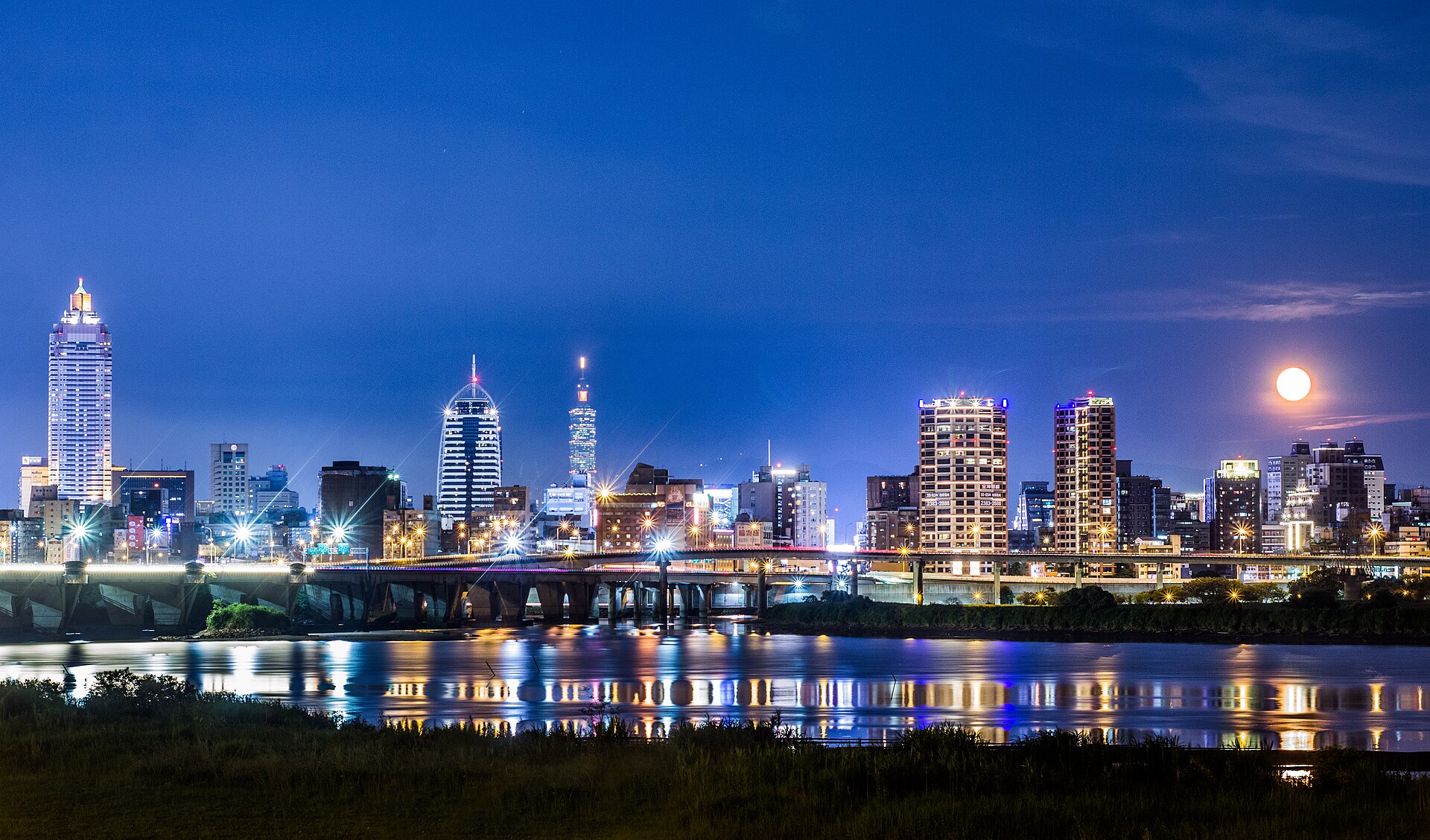
Taiwan, which has already established global dominance in the semiconductor space, is also emerging rapidly as a major hub for data centers and artificial intelligence. As we prepare to host w.media’s Taiwan Cloud and Datacenter Convention (TWCDC) 2026 on April 17, let us take a closer look at how Taiwan is attracting massive investments in hyperscale computing, AI superclusters, and high-tech infrastructure, thus positioning itself as a critical node in Asia’s digital economy.
Market snapshot
According to Mordor Intelligence, Taiwan’s data center market reached 280.90 MW in installed capacity in 2025, and is forecast to grow from 302.97 MW in 2026 to 468.11 MW by 2031, at a CAGR of 9.09 percent. Government support, renewable energy incentives, and 5G expansion are further accelerating development. Data center growth is driven by hyperscale projects, stricter energy-efficiency standards, and rising demand for semiconductor-related high-performance computing.

When it comes to colocation, ResearchAndMarkets finds that Taiwan’s data center colocation market was valued at US$ 190 million in 2024, and is projected to reach US$ 480 million by 2030, rising at a CAGR of 16.70 percent.
The country hosts major colocation providers such as Chunghwa Telecom, Chief Telecom, Acer eDC, Far EasTone Telecommunications, NTT Communications, Taiwan Mobile, Anson Network, and Vantage Data Centers.
Growth is being driven by government-led digitalization, strong infrastructure investment, a growing economy, increasing use of renewable energy and green hydrogen, and Taiwan’s strategic position near mainland China. By 2029, average facility occupancy is expected to reach 88 percent, this would leave a 12 percent vacancy.
Taiwan’s data centers are clustered in several key hubs. Taipei, the capital, remains the primary center, hosting over 60 percent of national capacity. The city’s dense fiber networks, robust submarine cable connections, and financial services infrastructure make it the preferred location for interconnection and enterprise colocation.
Outside Taipei, the cities Taoyuan, Taichung, Tainan, and Kaohsiung, are emerging as secondary hubs. Taoyuan, in particular, is experiencing rapid growth due to its industrial parks and proximity to Taiwan’s international airport. Tainan benefits from the semiconductor ecosystem, while Kaohsiung’s port and cable landing stations make it ideal for edge and regional infrastructure.
What makes Taiwan attractive?
Many regional and international players are gravitating towards Taiwan, drawn to its strategic location in Northeast Asia.
Singapore headquartered Empyrion Digital recently broke ground on its first data center in Taiwan. Explaining the reason behind choosing Taiwan, Mark Fong, CEO of Empyrion Digital, said, “Taiwan is a strategic market with a strong digital economy and a world-class technology ecosystem. This facility will deliver sustainable, AI-ready infrastructure that supports our customers’ growth and strengthens Taiwan’s position in the regional digital network.”
Weng Yew Wong, Managing Director, Open DC also calls Taiwan a “highly strategic market” for digital infrastructure because it combines strong industrial depth, advanced technology capabilities, and growing regional importance in the digital economy. “I see it as a market with solid long-term relevance, especially as demand for connectivity, resilience, and compute capacity continues to grow across Asia,” he says, adding “The investment opportunity is strong, but success will depend on how effectively the ecosystem addresses power, land, and scalability constraints.” Open DC is headquartered in Malaysia, but Wong is also keeping a sharp eye on Taiwan. He will also be a guest speaker and panelist at w.media’s upcoming Taiwan CDC.
He is also upbeat about the future of AI in Taiwan. “AI will significantly increase demand for high-density, power-intensive, and low-latency digital infrastructure, and Taiwan is well placed to benefit from that shift given its technology ecosystem and regional importance,” he says. “As AI adoption grows, data centers will need to evolve beyond traditional capacity planning toward more advanced power, cooling, and connectivity design. In that sense, AI will not just increase demand for data centers — it will reshape how data centers are built, operated, and located.”
Hyperscalers make a beeline for Taiwan
Taiwan is attracting all big players, including AWS, Microsoft, and Google, who are bypassing colocation intermediaries by buying land and power blocks directly from Taipower, which enables proprietary liquid-cooling systems and renewable-energy procurement.
Major U.S. cloud providers are accelerating capital deployment to secure land and power resources, while domestic telecom operators are shifting toward liquid-cooled, AI-optimized facilities to maintain competitiveness.
In 2022 AWS expanded its infrastructure footprint in Taiwan by launching AWS Local Zones in Taipei and AWS opened its three-zone Taipei region in January 2025 after investing more than US$ 5 billion, the largest cloud deployment in Taiwan that places compute, storage, database, and other select services to support the construction, connection, operation, and maintenance of its data centers in Taiwan.
Microsoft Corporation established its “Reimagine Taiwan” initiative in early 2020 as its first cloud datacenter region in Taiwan. Microsoft is also expanding its Taiwan Azure Hardware Systems and Infrastructure engineering team, positioning Microsoft Taiwan as a hub in Asia for innovation in advanced cloud software and hardware infrastructure, including AI, IoT, and edge computing solutions. Microsoft, together with its ecosystem and cloud customers, is expected to generate US $10 billion in new revenue.
Google opened a new office in Taipei in November 2025, and now Taiwan will be its largest AI hardware engineering hub outside the U.S. The office will bring together hundreds of employees working on AI infrastructure. The Taipei hub builds on Google’s existing presence in Taiwan, a location that connects design, engineering, manufacturing, and deployment for AI systems. Taiwan was also home to Google’s first data center in the Asia Pacific region, and the company has invested in several international subsea cable projects with other technology companies. Technology developed and tested at the Taipei hub will be used across Google’s data centers and AI infrastructure worldwide.
Additionally, government incentives such as renewable energy certificate subsidies, tiered electricity pricing, and rapidly evolving 5G edge requirements, are promoting innovation and reducing time-to-market. At the same time, challenges including seismic-resilient construction requirements, shortages of bilingual talent, and delays in grid connectivity are increasing costs and complexity, although they have not significantly hindered investment momentum.
The market structure is also evolving as Tier III facilities now account for more than half of Taiwan’s capacity, while colocation services occupy 45 percent of the market. Large-scale data centers dominate the scene, with hyperscale self-builds rapidly outpacing smaller facilities.
AI boom and Liquid Cooling adoption
Taiwanese manufacturers are rapidly expanding AI server production to meet soaring US demand for generative AI infrastructure, with Foxconn, Quanta Computer, and Wistron scaling capacity across Taiwan, Southeast Asia, and North America. Taiwanese firms now produce about 90 percent of the world’s AI servers, driven largely by orders for next-generation systems built around Nvidia hardware.
“Taiwan has one of the most strategically important digital infrastructures globally, underpinned by its leadership in semiconductor manufacturing and a highly reliable power and network backbone. With AI workloads scaling rapidly, the critical challenge is shifting from connectivity to energy efficiency and thermal management, creating opportunities for innovation in high-density computing,” says RT Huang, Director, Data Center Cooling Technology, Supermicro. Huang will be participating in panel discussions at TWCDC this year.
As AI servers become more power-dense and electricity demand rises, liquid cooling is emerging as a critical technology for these deployments, especially in large US data centers where traditional air cooling is no longer sufficient for high-performance AI racks. Quanta plans to double AI server capacity by the end of 2026, while Foxconn and Wistron are investing in new factories to support growing demand for liquid-cooled, sovereign AI infrastructure.
However, Huang who is also former Co-chair, Liquid Cooling Workgroup, The Green Grid, concedes, “Liquid cooling adoption in Taiwan remains at an early stage, constrained by risk aversion and a lack of standardized frameworks.” According to him, “Accelerating adoption requires clear integration standards, closer IT–facilities alignment, and proven large-scale deployments. More fundamentally, broader adoption depends on recognizing that cooling design is an energy strategy, not merely a thermal solution—this shift in perception will drive more decisive investment in energy-efficient, high-density AI infrastructure.”
Connectivity: The backbone of Taiwan’s digital ambition
Taiwan’s strategic location in East Asia makes it a key connectivity hub. Its extensive submarine cable network links Japan, Hong Kong, Southeast Asia, and the United States, while the Taipei Internet Exchange (TPIX) serves as one of Asia’s largest IXPs.
Notably, projects like the Meta-backed “Candle” subsea cable, spanning nearly 5,000 miles with 24 fiber pairs and 570 Tbps capacity, underscore Taiwan’s role as a regional gateway for high-speed internet and cloud traffic. These connections are vital for hyperscale and AI deployments, enabling rapid data transfer across the Asia-Pacific and globally.
Taiwan hosts multiple landing stations located at Tanshui, Toucheng, Fangshan, Pali and Dawu that serve as intersections for intra-Asia and trans-Pacific subsea cable networks. The Asia-Pacific Gateway (APG), New Cross Pacific (NCP), Pacific Light Cable Network (PLCN) are in Toucheng which interlink Japan, South Korea, Southeast Asia and USA. Tanshui has APCN-2 Southeast Asia-Japan Cable 2 (SJC2), Trans-Pacific Express (TPE), and FASTER, each of which provide additional connectivity to Asia and North America.
Maintaining Semiconductor dominance
Taiwan’s semiconductor industry continues to solidify its position as a global powerhouse. In 2024, the sector’s output reached NT$ 5.31 trillion (US$162.3 billion), marking a 22.4 percent increase from the previous year. Driving this growth was the IC manufacturing segment, which surged 28.4 percent to NT$ 3.41 trillion (US$ 106.3 billion), largely fueled by Taiwan Semiconductor Manufacturing Company’s (TSMC) NT$ 2.89 trillion (US$ 91 billion) in revenue from high-performance computing and smartphone chips.
IC design, packaging, and testing also saw notable gains, rising 16 percent, 7.7 percent, and 5 percent, respectively. The industry’s growth outpaced the global semiconductor market, which expanded 19.1 percent in the same period.
Taiwan’s semiconductor output reached NT$ 6.18 trillion (US$ 192.8 billion) in 2025, with IC manufacturing alone expected to surpass NT$ 4 trillion (US$ 127.6 billion). These trends highlight Taiwan’s critical role in the worldwide semiconductor supply chain and its continued influence on the global market.
Domestic companies, alongside global partners like NVIDIA and Foxconn, are developing GPU superclusters capable of hosting tens of thousands of GPUs for AI training, semiconductor simulation, and industrial digital twin projects.
At the time of launching an AI factory in May 2025, Jensen Huang, founder and CEO, NVIDIA, had said, “AI has ignited a new industrial revolution — science and industry will be transformed, with Foxconn and Taiwan to help build Taiwan’s AI infrastructure, and to support TSMC and other leading companies to advance innovation in the age of AI and robotics.”
Local manufacturers, including ASUS, Quanta, and Wistron, produce servers, GPUs, and networking hardware—ensuring that Taiwan not only hosts AI compute, but also builds the underlying infrastructure. These capabilities make the island uniquely positioned to combine hardware expertise with hyperscale data-center development.

Government initiatives and sustainability
Recently, Taiwan inaugurated the National Center for High-performance Computing’s Cloud Computing Center in Tainan on December 12, 2025, as a major component of the government’s New Ten Major AI Infrastructure Projects and Greater Southern New Silicon Valley plan.
The center, located in the Southern Taiwan Science Park, will function as a national AI and high-performance computing hub and an international telecommunications node. Built to commercial telecommunications standards, it has 15 MW of installed power, earthquake-resistant construction, backup systems, advanced cooling and high-speed fiber links to science parks, universities and cable landing stations.
President William Lai said the project is intended to strengthen Taiwan’s technological autonomy by reducing dependence on foreign computing systems. Taiwan plans to develop its own AI infrastructure, including ASIC chips, supercomputer networks, switches and storage systems, while integrating future silicon photonics technology.
The National Institutes of Applied Research, NTT and Chunghwa Telecom will jointly introduce all-optical networking technology, which is expected to reduce energy use and increase transmission speeds.
By 2029, NCHC computing capacity will expand to 23 MW through the Tainan center and the new Shalun Intelligent Innovation HUB. The larger Shalun site is expected to reach 120 MW and support generative AI, climate research, life sciences and semiconductor development.
Taiwan also launched the Super Computing Alliance Taiwan, bringing together government agencies and technology companies to coordinate computing resources, talent development and open-source software. The facility also houses the Nano4 supercomputer, demonstrating Taiwan’s growing domestic capabilities in advanced system integration and supporting cybersecurity, communications resilience and data protection.
Taiwan’s government actively supports digital infrastructure expansion and AI innovation. Programs include AI supercomputing initiatives, smart city development, and incentives for renewable energy integration in data centers. A US$ 28.7 billion climate and energy program through 2030 is accelerating grid upgrades, energy storage, and renewable power access critical for powering high-density AI facilities.
Water and power availability remain challenges, particularly in northern Taiwan, where grid bottlenecks and drought conditions influence site selection. Operators increasingly rely on recycled water systems and renewable power purchase agreements to maintain sustainable operations.
The Ministry of Economic Affairs began enforcing a PUE limit of 1.5 for hyperscale sites in November 2025 and rolled out tiered electricity tariffs in January 2026 that charge surcharges of up to 20 percent for inefficient facilities. Operators meeting the targets gain fast-track permits and power-rate discounts, prompting early adoption of liquid cooling, rooftop solar, and renewable certificate purchases. Chunghwa Telecom cut its fleet PUE to 1.61 in 2024 and targets 100 percent renewable sourcing by 2030. The incentive scheme is adding 1.5 percentage points to forecast CAGR.
Challenges and Opportunities
Despite strong growth, Taiwan faces constraints such as land scarcity around Taipei, seismic risks, and talent shortages that add complexity to data-center development. Yet, its advantages as a central APAC location, world-class connectivity, semiconductor expertise, and growing AI infrastructure position Taiwan as a compelling destination for hyperscale cloud providers and enterprise operators.
As the world increasingly pivots toward AI and high-performance computing, Taiwan is poised to emerge as a critical hub in the global digital ecosystem melding its semiconductor legacy with a rapidly expanding data-center infrastructure. For investors, developers, and tech companies seeking an APAC base for AI and cloud workloads, Taiwan’s trajectory makes it hard to ignore.
See you at TWCDC
Taiwan Cloud and Datacenter Convention (TWCDC) returns on April 17, 2026, and brings together Asia Pacific’s leading voices across data center design, investment, energy, connectivity, and regulation to examine what must change for Taiwan to scale its infrastructure ambition. The conversation goes beyond whether Taiwan can become a regional data center hub, and instead asks a larger question: how Taiwan, together with the wider Asia Pacific ecosystem, can play a more decisive role in powering the world’s next phase of AI growth. To know more, get the conference agenda, or your attendee pass, click the image below:
