
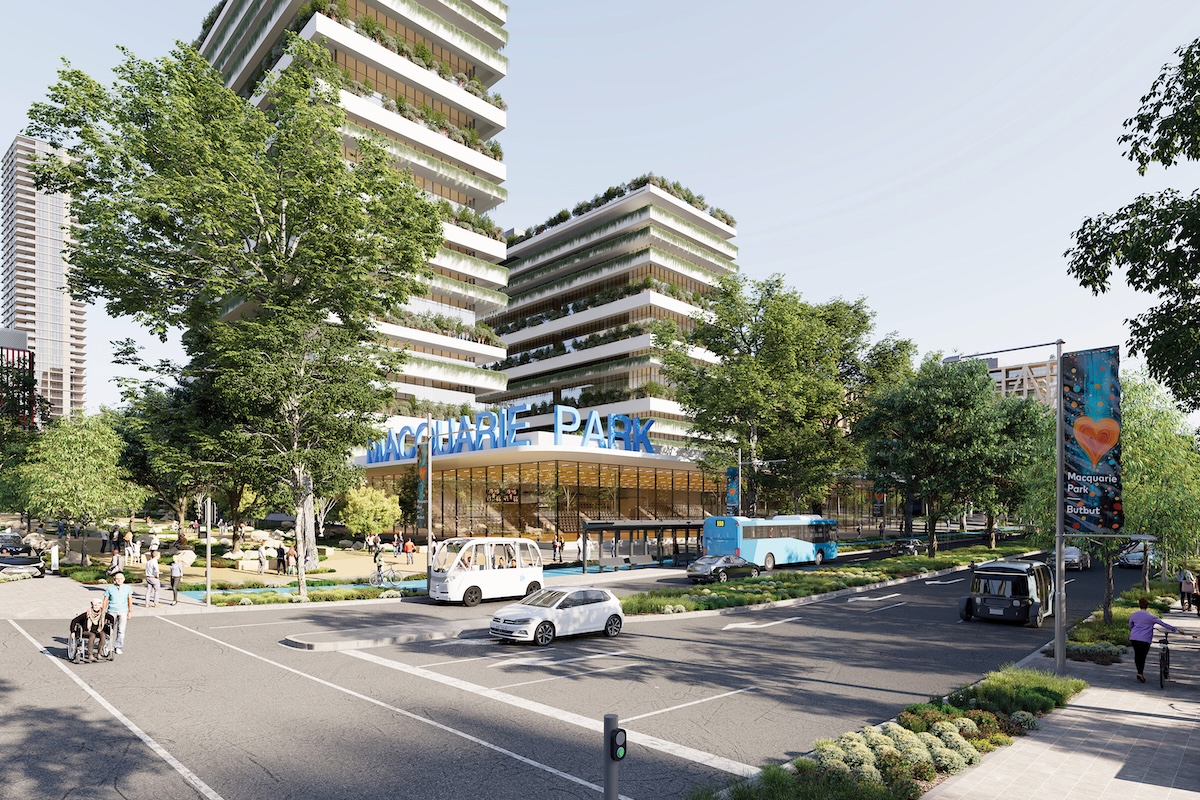
A Sydney council has raised concerns that the rapid clustering of data centres within a single urban precinct is placing increasing pressure on electricity, water, and land availability, highlighting the challenges of managing concentrated digital infrastructure growth. In its submission to the NSW parliamentary inquiry into data centres, the City of Ryde said the scale and pace of development in the Macquarie Park Innovation District has outstripped the delivery of supporting infrastructure and planning controls.
The council noted that five data centres are already operating in the precinct, with a further seven State Significant Development (SSD) proposals under assessment, bringing the total to 12 facilities concentrated within a single strategic centre.
By comparison, other Sydney clusters are more geographically distributed. The council pointed to CDC’s Eastern Creek campus, which comprises six data centres, and a further six at Marsden Park, arguing that the intensity of clustering in Macquarie Park is unique.
Localised infrastructure pressure emerges
A central theme of the council’s submission is the distinction between aggregate resource use and localised impact, with the council arguing that infrastructure constraints are being felt at the precinct level rather than across the broader system.
Sydney Water has advised that the Marsfield supply zone servicing Macquarie Park is already operating at full capacity, with augmentation works not expected until late 2026. The council said this has already had tangible effects on development timelines, noting that some approved housing projects have been delayed because Sydney Water has been unable to meet the required capacity.
Water demand figures cited in the submission illustrate the scale of individual facilities. According to the council’s quoted figures, 1MW data centre can consume up to 25.5 million litres annually, while a 100MW facility could require around 250 million litres per year, with typical flow rates of approximately 56 litres per second.
At a project level, the expansion of a data centre at Talavera Road is expected to consume 790,000kL annually, equivalent to the daily water use of around 10,820 people. Another proposed facility at Lane Cove Road is estimated to use 3,732kL per day at full capacity, roughly equivalent to 1.5 Olympic-sized swimming pools or the daily consumption of 18,000 people.
While data centres currently account for a relatively small share of Sydney’s total water consumption, the council cited Sydney Water and Water Services Association of Australia (WSAA) projections that they could consume up to 25% of the city’s drinking water supply by 2035, highlighting the importance of understanding both aggregate demand and localised constraints.
Electricity demand and baseload characteristics
The council also highlighted the continuous load profile of data centres as a key planning consideration, noting that facilities typically operate at load factors between 70% and 85%, contributing significantly to baseload demand. Individual facilities can require substantial capacity, with large data centres consuming as much electricity as 50,000 to 100,000 homes, according to the council.
At a system level, data centres are estimated to account for around 5% of Australia’s electricity consumption today, with projections ranging from 8% to 15% by 2030. The council also cited modelling suggesting electricity use could reach approximately 21.4TWh, or around 9% of total grid consumption, reflecting the scale of demand growth associated with digital infrastructure.
The council said the current infrastructure in the area was not designed for such high, continuous loads, raising concerns about the timing of network upgrades relative to approvals.
Land use tensions and opportunity cost
Beyond utilities, the submission places significant emphasis on land use trade-offs in a high-value urban precinct. Data centres are described as a low-employment land use relative to their footprint, typically generating between 20 and 50 permanent jobs per facility.
The council contrasted this with construction-phase employment, noting that one major project could generate more than 3,400 construction jobs but only around 50 ongoing operational roles once complete.
The council cited examples where data centre developments have displaced alternative uses, including a site on Talavera Road that was previously proposed to deliver 1,400 apartments, and another at Lane Cove Road that could accommodate more than 1,000 homes under existing controls.
More broadly, it warned that continued concentration could reduce the availability of land for housing and innovation-led employment, altering the character of the precinct.
Cumulative impacts under scrutiny
A recurring concern is the limited assessment of cumulative impacts across multiple facilities within a single area. The council said current planning processes tend to assess projects individually, with less emphasis on combined effects such as aggregate electricity demand, water consumption, heat load, noise, and construction impacts.
If all proposed projects proceed, the number of data centres in the local government area would increase from five to 12, representing a 140% increase and raising its share of NSW facilities from 4.6% to more than 10%.
The submission argues that this level of clustering could intensify infrastructure pressure and create land-use conflicts, particularly where data centres are located near planned residential developments.
Emissions and resource alignment
The council also raised questions about alignment with emissions targets, noting that data centres rely on continuous electricity supply and that a significant proportion of grid energy remains fossil fuel-based.
It cited modelling suggesting data centre electricity use in the National Electricity Market could reach 21.4TWh, or around 9% of total grid consumption, while local emissions from Macquarie Park alone accounted for 38% of the council’s total emissions in 2023–24. The submission argues that approvals should be more closely aligned with the pace of renewable energy deployment and infrastructure capacity.
Recommendations focus on planning and transparency
The council’s recommendations for the NSW state government centre on a more coordinated, strategic approach to data centre development. It called for a state-wide planning strategy to guide the location of data centres based on infrastructure capacity, alongside clearer guidelines for assessing cumulative impacts at a precinct level.
Additional recommendations include stronger requirements for water management and reporting, with proponents expected to fund necessary infrastructure upgrades and disclose actual resource use over time. The council also proposed greater transparency around environmental performance and the introduction of regular cumulative reporting to better understand system-wide impacts.
Balancing growth with infrastructure capacity
The submission reflects a broader tension emerging in Sydney and other global markets, where rapid data centre growth is intersecting with housing demand, infrastructure constraints, and decarbonisation targets.
While data centres are widely recognised as critical infrastructure underpinning digital services and AI development, the Ryde submission highlights the importance of considering how their scale, location, and timing interact with local systems.
In particular, it suggests that planning frameworks may need to evolve to better account for concentrated demand within specific precincts, rather than relying solely on aggregate, system-wide metrics.