
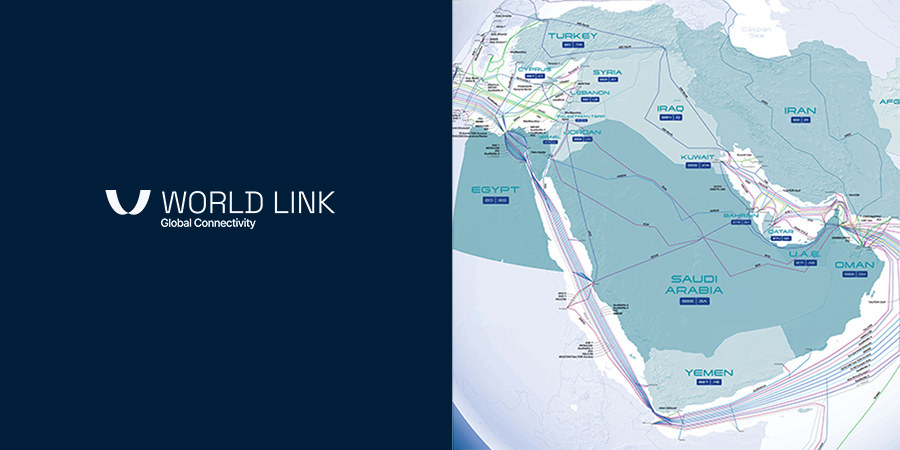
An Iraqi-UAE consortium is advancing the US$ 700 million World Link Transit Cable Project, a hybrid subsea and terrestrial fiber-optic network designed to establish a new digital corridor linking Asia and Europe through Iraq and Turkey. The consortium aims to position the Iraq–Turkey axis as a major node in future global data architecture and project implementation is expected to proceed in phased construction over four to five years.
World Link is structured as a transit-first backbone network optimized for hyperscale traffic. The route begins with a submarine fiber segment from Abu Dhabi in the United Arab Emirates (UAE) to the Faw Peninsula. Planned branch extensions will connect members of the Gulf Cooperation Council, including Qatar, Bahrain, Saudi Arabia and Kuwait.

Engineering targets include over 900 Tbps of aggregate capacity and consistent sub-100 millisecond latency between European and Middle Eastern nodes, supporting real-time AI workloads, cloud distribution, and financial market traffic. The system follows a carrier-neutral access model intended to allow multiple telecommunications operators to lease capacity.
The privately financed project is led by Tech 964, headed by Ali El Akabi Breeze Investments, chaired by Nayef Al Ameri and DIL Technologies. The consortium emphasized that “AI infrastructure readiness is a necessity,” citing growing global demand for low-latency compute and data transport as reported by submarine cable networks.
From southern Iraq, the network will deploy dual terrestrial fiber corridors across federal and autonomous regions before reaching the border with Turkey and integrating with European backbone infrastructure.
The project is positioned as part of a broader shift in east–west digital logistics. Approximately 80 percent of Asia–Europe internet traffic currently moves through maritime routes in the Red Sea corridor, creating congestion risks and exposure to regional disruptions.
By providing a land-based alternative, World Link aims to diversify global data transit paths and strengthen digital resilience. For Iraq, the initiative complements the US$ 17 billion Development Road initiative, which seeks to transform the country into a strategic logistics and connectivity hub linking Gulf shipping gateways with European markets.

The launch of World Link occurs amid rising Gulf investment in digital infrastructure corridors. Industry observers link the project to broader competition in AI-era connectivity, particularly after the emergence of SilkLink, another Gulf-supported Eurasian data transit proposal.