
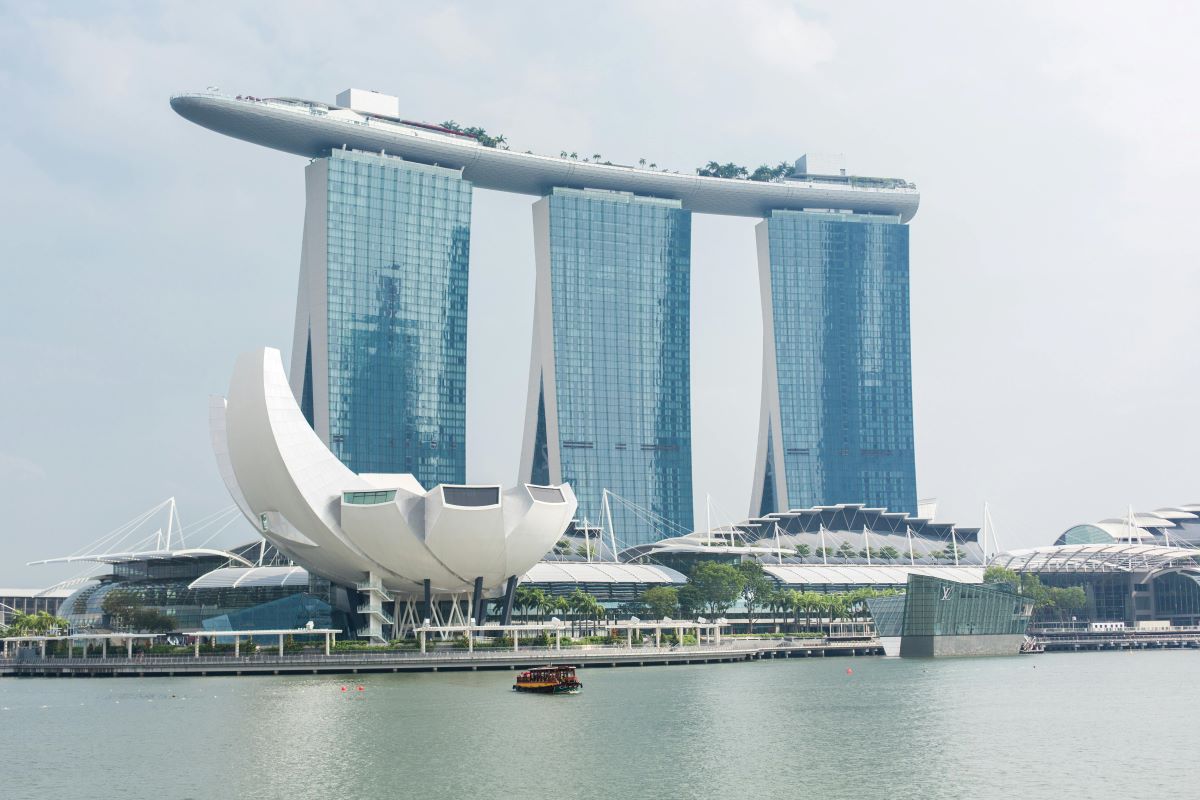
Singapore will set up a new National AI Council to oversee and harness the power of artificial intelligence (AI) in four key sectors, namely advanced manufacturing, connectivity, finance and healthcare, Singapore’s Prime Minister and Finance Minister Lawrence Wong announced yesterday when tabling Budget 2026 in Parliament.
The council will be chaired by Wong himself who has expressed the “immense” potential of the technology in raising productivity, unlocking new discoveries and transforming lives.
“AI is advancing at remarkable speed. We are reaching a stage where systems can write their own code and improve through iterative learning,” he said, adding however that the technology is still a tool which must be harnessed to serve the country’s national interest and people.
“We will define how AI is developed and used in Singapore. We will set clear rules to ensure it is applied responsibly and safely. And we will ensure that its benefits are shared widely across society,” he said.
As part of the AI initiatives, Singapore will establish an AI park at One-North, which is similar to a co-working space to catalyse ideas, forge collaborations, and translate AI initiatives into practical solutions for businesses and public services.
To encourage corporate AI adoption, the government will expand the Enterprise Innovation Scheme to include AI expenditures as a qualifying activity for the Years of Assessment (YA) 2027 and 2028 and capped at S$50,000 per YA. Under the scheme, businesses already enjoy 400 per cent tax deductions on activities such as research and development (R&D), innovation and capability development. Additionally, the existing Productivity Solutions Grant (which helps firms defray the cost of adopting digital tools) will be expanded to cover more digital and AI-enabled solutions.
Singapore will also come up with measures to support skills training as the workforce transitions to an AI-driven economy.
Singapore firms have invested an average of S$18.9 million in AI over the past year, generating an average return on AI investment of 16 per cent — with expectations this could rise to 29 per cent within two years, according to recent research by SAP Singapore.
Execution at scale
Commenting on the Budget announcement, Eileen Chua, Managing Director, SAP Singapore said, “The next evolution of Singapore’s AI strategy rightly focuses on execution at scale. Successful end-to-end AI transformation demands clean data foundations, modern cloud architectures, redesigned workflows and workforce enablement.”
Chua added: “What will determine the next phase of value is readiness. Our research shows that 70 per cent of leaders are still unsure if they are capturing AI’s full potential, largely due to gaps in skills and data integration. The Budget’s focus on stronger AI literacy and clearer learning pathways, including SkillsFuture enhancements and tailored enterprise support, aligns directly with what businesses say they need to move forward with confidence.”
While agreeing that execution and infrastructure readiness are key for businesses to move forward in AI this year, the digital transformation also requires organizations to re-architect data flows, redesign workflows, and modernize the foundational systems that connect people, processes, and technology, said Adeline Liew, Country Business Leader, Singapore, Alcatel-Lucent Enterprise.
“To unlock the full economic potential of Singapore’s AI investments, infrastructure must be viewed as a strategic enabler rather than a back-office utility. AI readiness should be treated as a core business capability—embedded into enterprise architecture, security frameworks, and operational strategy. This includes networks designed to handle high-volume data traffic intelligently, ensure real-time responsiveness, and safeguard digital assets,” Liew added.
