
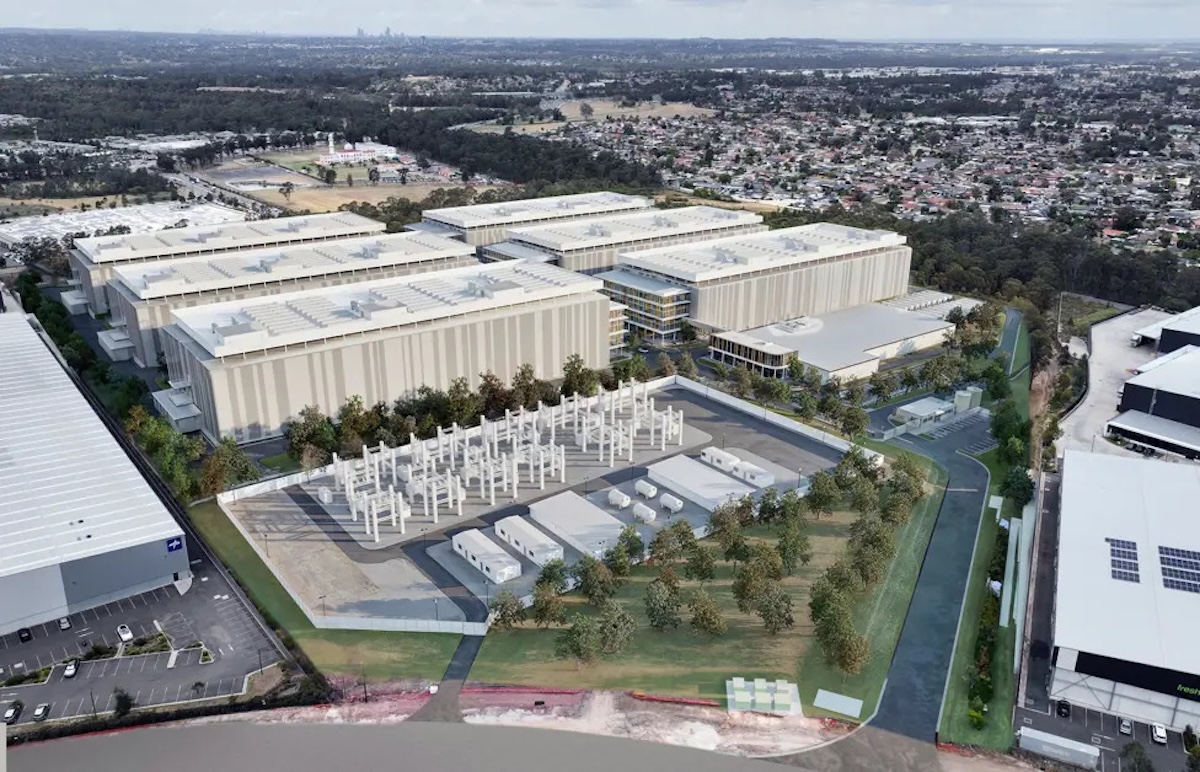
A New South Wales parliamentary inquiry has been launched to examine the rapid expansion of data centres across the state, with a remit that spans planning policy, infrastructure readiness, environmental impacts and economic outcomes. The inquiry, led by the NSW Legislative Council’s Public Accountability and Works Committee, will assess whether the state is adequately prepared for the pace and scale of development now underway, particularly in areas where facilities are increasingly clustered, such as Western Sydney and parts of the Lower North Shore.
The committee has been asked to inquire into and report on the current and projected scale of data centre development in NSW, how effectively existing planning and infrastructure frameworks are managing that growth, and how data centres interact with broader state economic, digital and industrial strategies. Submissions are due by 27 March 2026, with the committee scheduled to report by 30 September.
While the inquiry follows growing community concern about the concentration of large-scale facilities near residential areas, its formal terms of reference are wide-ranging and technical in scope. They cover electricity demand and grid impacts, water use and cooling technologies, land use and housing interactions, cumulative environmental effects, governance and transparency arrangements, and workforce considerations. The inquiry will also consider lessons from other Australian and international jurisdictions facing similar growth pressures.
What the committee will assess
Central to the committee’s work will be whether current planning frameworks are equipped to deal with cumulative and precinct-level impacts. Data centres in NSW are commonly assessed as State Significant Development, with assessment pathways that have been tied primarily to electricity demand rather than physical scale. The inquiry will examine whether this approach remains appropriate as facilities become larger, denser and more numerous, and as fast-track mechanisms such as the Investment Delivery Authority play a greater role in approvals.
Energy use is another major focus. The terms of reference require the committee to consider the continuous and high-load electricity profiles of data centres, their implications for generation, transmission and distribution investment, and how those demands align with NSW’s legislated emissions reduction targets. This includes scrutiny of on-site backup generation, such as diesel and gas, and the associated emissions and health impacts. The potential role of locating data centres within Renewable Energy Zones to support the state’s renewables roadmap is also explicitly included.
Water consumption and cooling technologies form a separate stream of inquiry. The committee will look at current and projected water use, reliance on potable supplies, and risks to water security under drought and climate change scenarios. It will also examine the feasibility and uptake of non-potable water, recycled water and alternative cooling systems, alongside questions of water pricing, cost recovery and transparency of commitments made during planning approvals.
Beyond infrastructure and resources, the inquiry will assess local environmental and community impacts, including noise, heat, traffic and construction disruption, as well as land-use conflicts with housing and other employment-intensive industries. The economic case for data centres will be examined alongside how costs and benefits are distributed, including the extent of any public subsidies or state-directed facilitation provided to the sector.
Improving the quality of the debate
Industry participants have acknowledged the breadth of the inquiry and are positioning it as an opportunity to improve the quality of public debate. Andrew Sjoquist, founder and CEO of WinDC, argued in a recent LinkedIn post that the inquiry should move beyond simply cataloguing concerns. Instead, he said, each issue raised should be paired with “practical, implementable solutions” and supported by clear, agreed metrics for economic impact, environmental performance, social licence and system resilience.
Sjoquist also called for a more systemic framing of the sector’s role. Data centres, he said, sit at the intersection of energy policy, regional development, planning, national productivity and digital sovereignty. Treating them in isolation risks repeating past policy mistakes, while a more integrated approach could help guide decisions on how facilities are designed, located and operated to maximise net public benefit over the long term.
That perspective aligns with recent moves by developers and hyperscalers in Australia to coordinate more closely on policy and community engagement, including the formation of Data Centres Australia as a peak industry body. Internationally, the sector has also stepped up efforts to explain its economic role, amid heightened scrutiny of resource use and local impacts.
Political positioning
The NSW state government is a steadfast supporter of the data centre industry, above and beyond the formation of the Investment Delivery Authority last year. It has already giving the green light to CDC’s AUD 3.1 billion data centre, the biggest in the Southern Hemisphere, and attracting OpenAI’s AUD 7 billion data centre in the past couple of months alone.
The committee chair, Abigail Boyd of the Greens however warned that “when governments allow development to race ahead without an integrated strategy, the public ends up paying the price.” She argued that further scrutiny is required because the committee must “decide for ourselves whether the environmental and climate implications are costs the public are willing to bear.”
Like Sjoquist, the NSW opposition has argued that the inquiry should be grounded in a clear understanding of the economic and social opportunities presented by AI and the digital infrastructure required to support it. While acknowledging that water use, energy demand and environmental impacts must be managed responsibly, the opposition has cautioned against allowing those issues to become a proxy for discouraging investment in infrastructure seen as critical to future productivity and public service delivery.
Better outcomes
Ultimately, the inquiry’s scope suggests it will be less about whether data centres should be built in NSW and more about how their development is governed as demand accelerates. By examining planning settings, infrastructure coordination and transparency alongside environmental and community outcomes, the committee has the opportunity to provide a more evidence-based framework for managing growth.
Whether it succeeds may depend on its ability to balance legitimate local concerns with the technical realities of digital infrastructure, and to translate its findings into clear guidance for government, industry and communities alike. As submissions open, the process now shifts from political positioning to the detailed work of assessing how NSW can accommodate data centre growth in a way that is resilient and sustainable.