
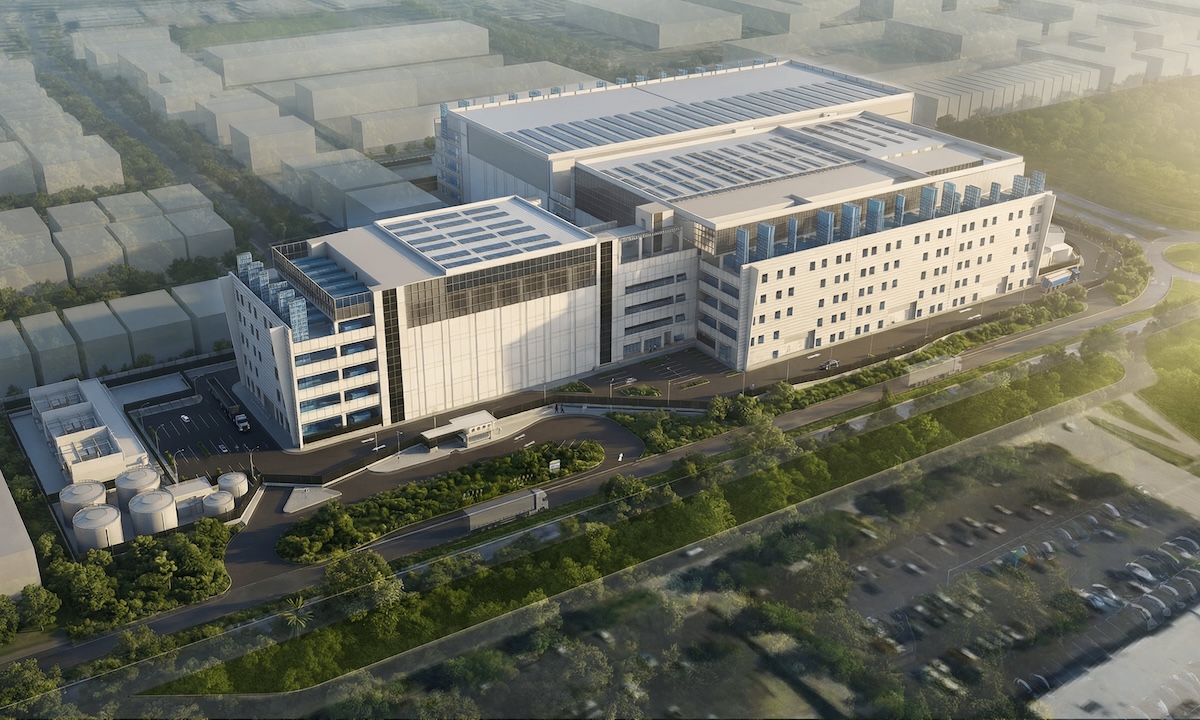
AirTrunk announced plans to add more than AUD 5 billion in new direct investment and lift its total deployable capacity in Melbourne to over 630 MW. The Asia Pacific & Middle East hyperscale data centre builder and operator announced the acquisition of a new site in Melbourne’s North-west for its second Melbourne campus, to be known as MEL2, and will feature over 354 MW of capacity.
Across MEL1 and MEL2, AirTrunk’s investment in the city’s digital infrastructure will exceed AUD 7 billion, delivering what the company describes as “one of the largest economic and productivity boosts to Victoria”. AirTrunk’s Australian platform now delivers over 1.2 GW across five campuses.
The new site will complement AirTrunk’s existing Australian campuses, giving global AI and cloud customers greater geographical diversity across the Sydney and Melbourne markets. AirTrunk will operate five campuses nationally – SYD1 (121 MW+), SYD2 (158 MW+), SYD3 (330 MW+), MEL1 (276 MW+) and MEL2 (354 MW+) – delivering a combined capacity of more than 1.2 GW.
“Australia has set bold ambitions to become a global AI hub, and demand for AI ready infrastructure continues to grow,” said AirTrunk founder and CEO Robin Khuda. “MEL2 is part of our response. Working closely with Invest Victoria, we’re expanding in Melbourne to support Australia’s AI future while creating new opportunities for local business and communities.”
He added: “AI data centres require significant upfront investment, and AirTrunk’s strong balance sheet and proven regional track record help give global AI customers confidence in reliable, on‑time deployment in Australia.”
State hub
The company said MEL2 will create over 4,000 jobs during the multi-phase construction and over 200 direct jobs, once operational. In addition, AirTrunk will boost the local supply chain creating in excess of 1,000 full-time jobs to support its data centres.
Victorian premier Jacinta Allan said: “Victoria is leading Australia’s digital transformation, and investments like this will strengthen our state’s position as a hub for cloud and AI innovation, create thousands of jobs, and deliver sustainable infrastructure that supports our growing technology ecosystem.”
AirTrunk’s expansion in Melbourne follows last week’s announcement of a new hyperscale campus in Osaka, Japan, delivering up to 100 MW of IT load in Japan and a AUD 3 billion+ new direct investment in Japan.
OSK2 and MEL2, which will become AirTrunk’s 14th and 15th data centres respectively, expand the company’s hyperscale platform to deliver a total capacity in excess of 2.6 GW across six markets in Asia Pacific and Middle East: Australia, Singapore, Japan, Malaysia, Hong Kong and Saudi Arabia.
According to last month’s “Data Centres as enabling infrastructure”, Mandala Report, by Natalie Waldman, Australia’s data centre industry generates AUD 12.6 billion in gross value added per terawatt-hour of energy consumed, outperforming sectors such as mining and manufacturing.
Waldman claims data centres also consume less than 0.1% of Australia’s water, and by 2030, will have invested up to AUD 1.1 billion in recycled water infrastructure. Since 2020, the industry has invested AUD 3.1 billion in grid infrastructure, with total investment expected to reach AUD 7.2 billion by 2030, reinforcing its role as a cornerstone of sustainable growth.
Asset recycling
Khuda told the AFR that the Melbourne investment represents merely the beginning of a robust 2026 pipeline. He explained that financing this growth would necessitate deeper and more diverse capital sources across the industry, adding that AirTrunk plans to broaden its funding toolkit beyond traditional bank debt to keep pace with upcoming demands.
He revealed that AirTrunk was engaged in discussions about asset-backed securitisation funding and was also considering asset recycling, given that several of its sites were reaching maturity. Asset recycling is commonly employed in the public sector, where governments sell or lease physical infrastructure, such as roads or airports, to private investors to fund new projects while avoiding excessive bank debt.
Khuda said that once sites like MEL2 and OSK2 become fully operational, they would transform into the type of long-term assets that pension and superannuation funds seek.