
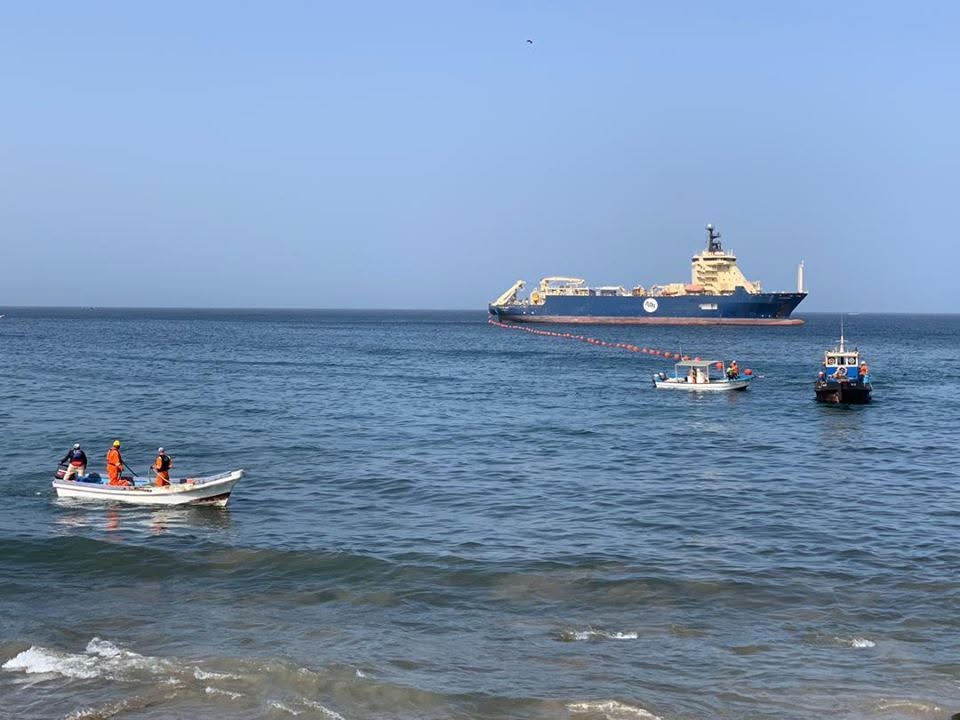
The consortium that manages the 17,000 km Africa Coast to Europe (ACE) subsea cable system, which connects Europe, West Africa, and South Africa, is set to modernize the system to deliver expanded bandwidth with minimal disruption to existing services.
According to a press release, the ACE subsea cable’s capacity will be increased to more than 30 Tbps from its current 400 Gbps. The modernization will include enhanced automation and visibility, allowing operators to manage services and scale more effectively.

“International routes drive economic growth, digital inclusion, and cloud adoption across Africa, and this upgrade gives regional service providers a high-capacity path that reaches more than 500 million people,” said Philippe Recco, ACE Management Committee President.
The consortium selected Ciena to upgrade the cable system. The firm’s solutions are said to be able to scale the system while reducing the need for complex traffic migrations. Ciena will also manage ongoing maintenance and transformation as ACE prepares to meet the demand for more resilient connectivity across Africa and between the continent and Europe.
“Ciena supports this vital link between Africa and the rest of the world with our subsea deployment expertise and coherent optical innovations,” said Thomas Soerenson, Ciena Vice President of Global Subsea. “Together, we are expanding existing cable infrastructure and developing a long-term technology roadmap for future growth with minimal operational impact.”

The ACE subsea cable is one of several running along Africa’s coastline. It serves more than 500 million people in 20 countries and provides connectivity to land locked nations like Mali and Niger. The cable has been operational since December 2012 and connects to carrier-neutral points of presence in Paris, Lisbon, and Cape Town. The consortium has not said when the increased capacity will become available.